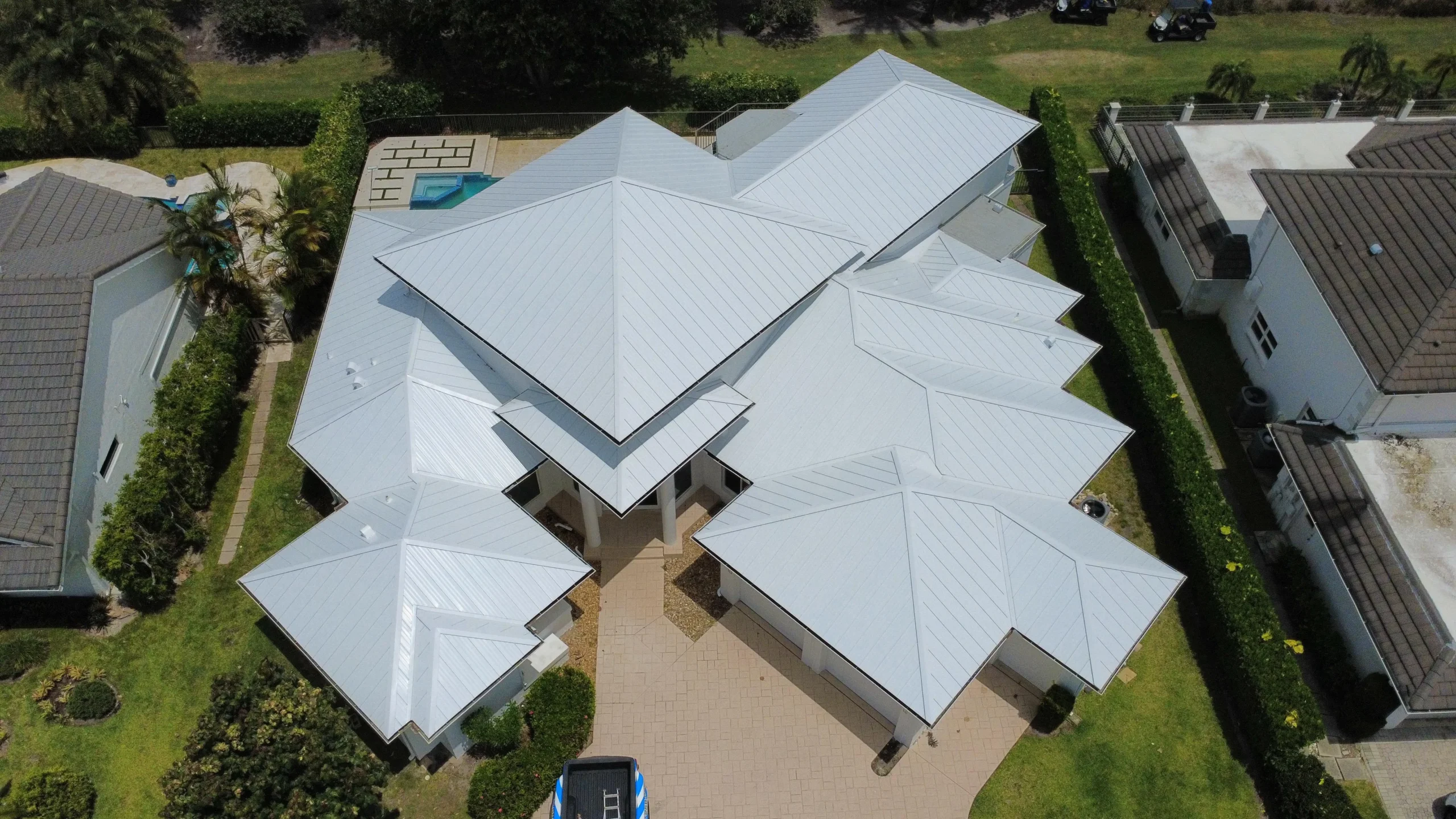
Under strong midday sun, a dark roof surface can become far hotter than the surrounding air. That heat doesn’t just wear on the roofing materials; it moves into the building and can keep cooling systems working harder.
Cool roof technology is designed to reflect more sunlight and absorb less heat than traditional roofing, so the roof surface stays cooler under the sun. In warm, sunny regions like Florida, that can mean lower roof temperatures, reduced cooling demand, and less heat stress on some roofing systems.
Real energy savings depend on building size, insulation, HVAC efficiency, and climate, so this guide takes an honest look at how cool roofs work, where they tend to help most, and what determines actual performance.
The Core Science: Solar Reflectance vs. Thermal Emittance
Cool roofs come down to two properties, both described by the U.S. Environmental Protection Agency (EPA) and the U.S. Department of Energy (DOE):
- Solar reflectance: The share of sunlight a roof surface reflects away instead of absorbing.
- Thermal emittance: How effectively the roof releases absorbed heat instead of passing it into the building.
A roof with high values for both stays noticeably cooler in the sun than a dark roof with low values. Heat moves through a building’s materials by conduction, so when the temperature difference between the outer roof surface and the space below is smaller, less heat gets through.
Types of Cool Roof Materials
Cool roofs aren’t limited to bright white commercial flat roofs. Reflective options exist across several roofing types:
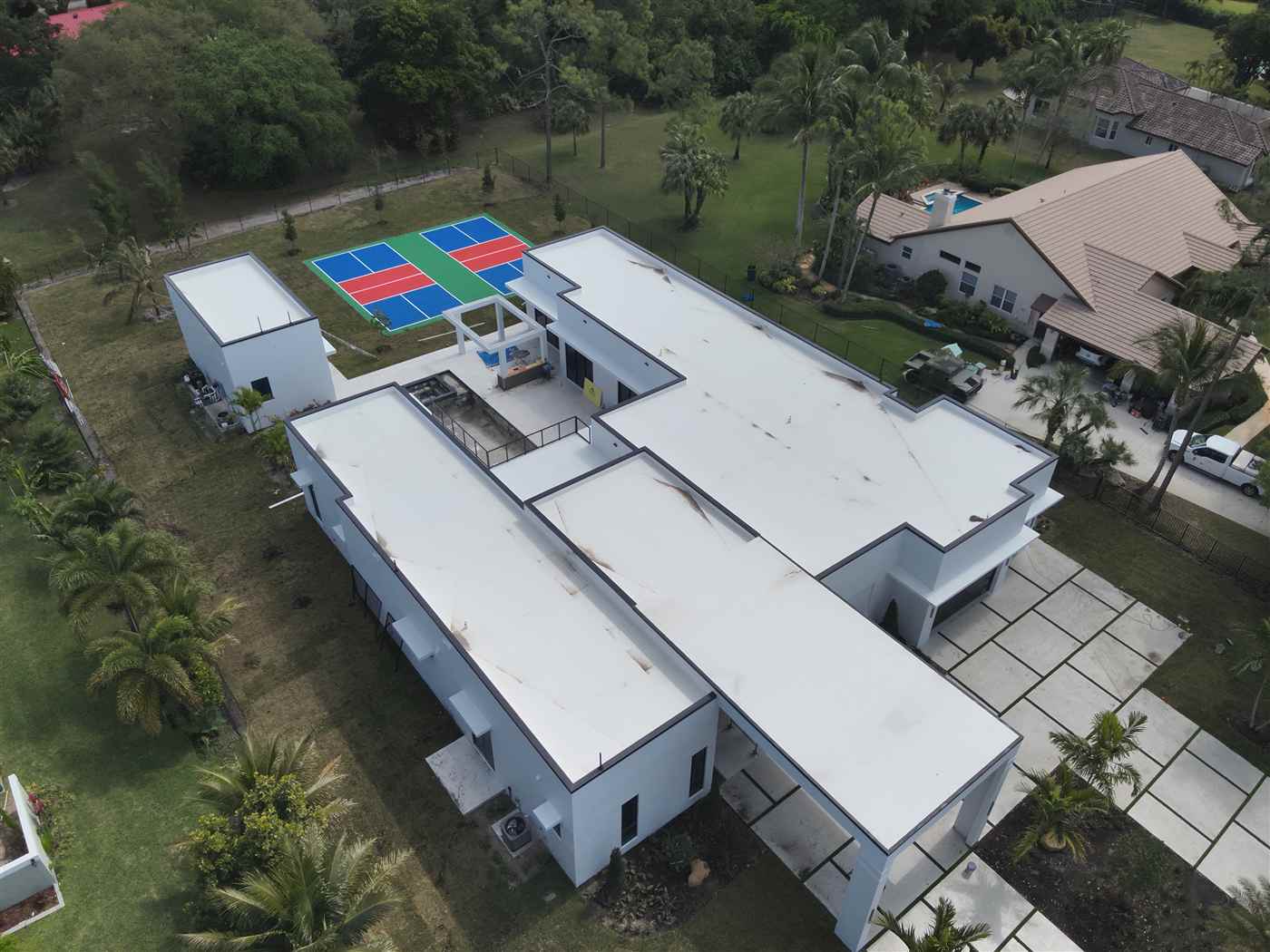
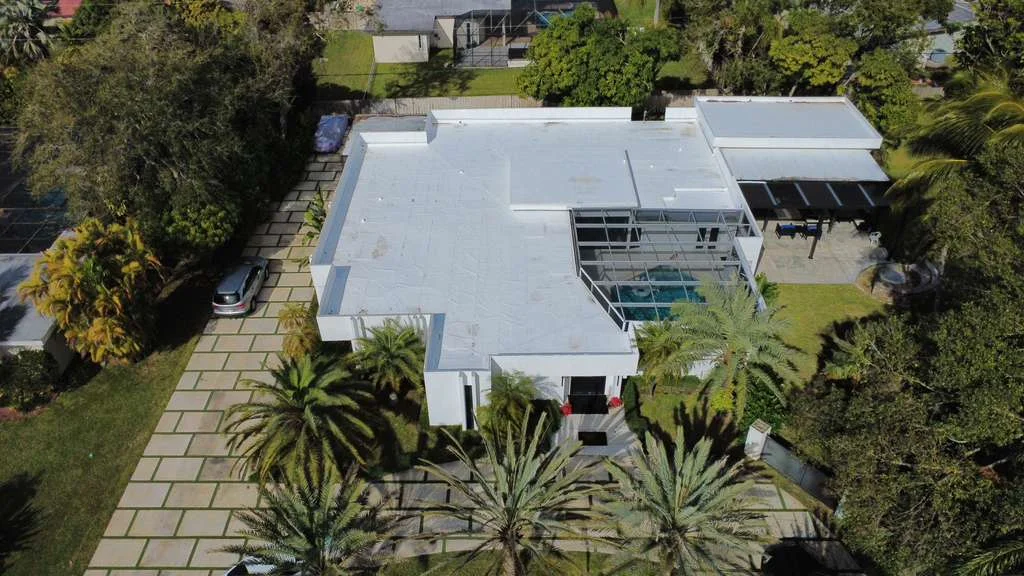
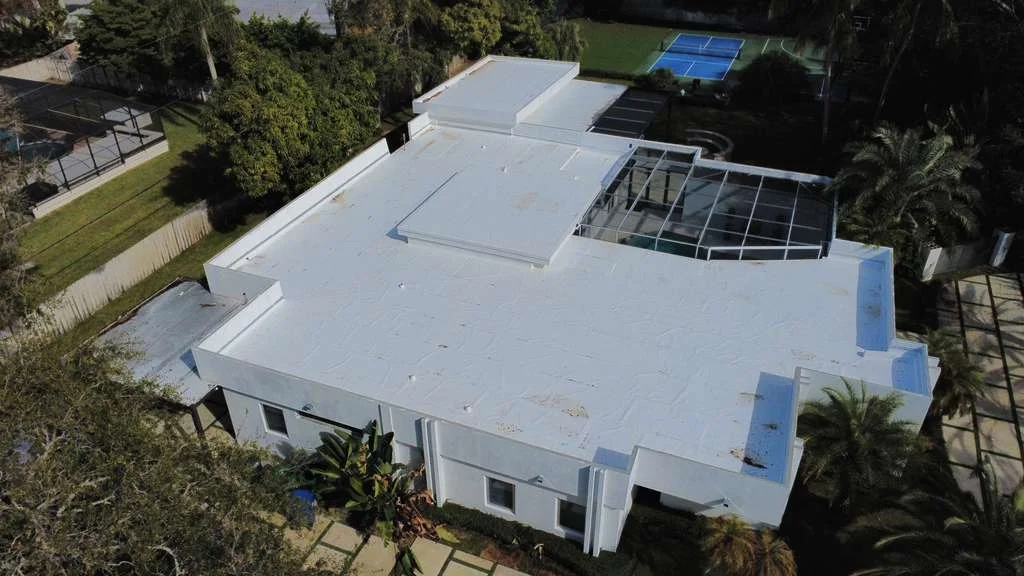
- Single-ply reflective membranes: White TPO roofing systems are common on flat and low-slope commercial properties. TPO has heat-welded seams and a reflective white surface.
- Reflective coatings: Liquid-applied coatings placed over suitable existing roofs to add reflectivity and help protect the surface.
- Reflective granule shingles: Asphalt shingles made with cool-pigment granules, for steep-slope homes where a traditional shingle look is preferred.
- Coated metal panels: Metal roofs with factory-applied reflective finishes, such as PVDF-based coatings.
- Concrete and clay tile: Light-colored or specially coated tile, common in Mediterranean and coastal Florida styles.
Curious how color fits in? Our guide to choosing the best roof color covers how different shades affect heat and appearance.
The Main Advantages of a Cool Roof
1. Lower Roof Surface Temperatures
On sunny afternoons, a reflective roof surface can stay significantly cooler than a conventional dark one. Lower surface temperatures reduce the heat available to move into the building and reduce thermal stress on the roof.
2. Reduced Cooling Demand in Hot Climates
Florida Solar Energy Center (FSEC) field demonstrations of light-colored roof surfaces in Florida buildings measured changes in cooling energy use, and the results varied from site to site. That variation is the point: savings depend on the building, not just the roof. For commercial facilities, easing peak cooling loads may also reduce peak electrical demand.
3. Less Heat Stress on Some Roofing Systems
Dark roofing materials expand in the heat of the day and contract at night. By reducing extreme surface temperatures, a cool roof can reduce thermal stress, though actual service life depends on the system, installation, and maintenance.
4. Better Comfort in Unconditioned Spaces
In buildings without central air conditioning, such as warehouses, garages, or attics, a cooler roof can lower interior temperatures and improve comfort on hot days.
5. Reduced Urban Heat Island Effect
When cool roofs are used across many buildings, they can help reduce heat island effects, which is why the EPA’s heat island programs promote them.
What Determines Your Actual Savings?
Every building is different, so no reputable contractor or manufacturer can promise a blanket energy-savings percentage. These variables shape the result:
| Performance factor | Higher savings potential | Lower savings potential |
|---|---|---|
| Regional climate | Hot, sunny climates with long cooling seasons, such as Florida | Cold climates with long heating seasons |
| Insulation | Less insulation under the roof | Thick, modern insulation |
| Roof area | Large, low-rise buildings with a lot of roof for their floor area | Buildings with little roof area relative to floor area |
| Occupancy and HVAC use | Commercial facilities running air conditioning for long hours | Spaces that are rarely cooled |
| Surface condition | Clean, newly installed reflective surfaces | Dirty or algae-stained surfaces |
Regional Considerations: Florida vs. Pennsylvania and New Jersey
The Florida Advantage: A Long Cooling Season
With Florida’s long cooling season and intense sun, reflective roofs are a natural consideration. On flat and low-slope properties, white membranes and reflective coatings are common choices.
Florida installations still have to meet wind and code requirements. Roofs in South Florida must follow strict wind-resistance rules, especially in the High-Velocity Hurricane Zone (HVHZ) covering Miami-Dade and Broward counties. If you manage a commercial property, our commercial flat roofing page explains TPO and EPDM options, and any reflective system must still be selected and installed to the code that applies at the address.
The Mid-Atlantic Balance: Greater Philadelphia and South Jersey
In colder climates, a highly reflective roof can reduce beneficial winter solar heat gain, which may slightly increase heating needs. The EPA notes that summer savings typically offset this in many climates, and that heavy winter snow cover reduces the effect. The balance depends on the building, so it is worth evaluating before choosing a reflective system in the Mid-Atlantic.
Pitfalls to Avoid Before Installing a Cool Roof
- Ignoring underlying damage: Reflective coatings and membranes do not repair rotted decking, saturated insulation, or active leaks. Complete necessary repairs first.
- Skipping maintenance: Dust, pollution, and algae can reduce reflectance over time. The EPA notes that low-slope roofs need periodic cleaning to maintain performance, and the right method depends on the roofing material and manufacturer guidance.
- Relying on old certification labels: The ENERGY STAR specification for roof products was sunset in 2022. Check independent ratings through the Cool Roof Rating Council to compare tested solar reflectance and thermal emittance values.
Frequently Asked Questions
What is the difference between a cool roof and a standard roof?
A cool roof uses materials with higher solar reflectance and thermal emittance. A standard dark roof absorbs more sunlight and heat, while a cool roof reflects more sunlight away, so its surface stays cooler under the sun.
Do cool roofs work on steep-slope homes?
Yes. Options include shingles with reflective granules, metal panels with reflective finishes, and light-colored or specially coated tile, so you can gain cool roof benefits without giving up a residential look.
Does a cool roof have to be bright white?
No. White membranes tend to reflect the most, but newer pigments and coatings allow metal, tile, and shingle products in other colors to achieve high reflectivity. Check a product’s rated values rather than judging by color alone.
Can a cool roof increase my winter heating bills?
In colder climates it can, because reflectivity reduces winter solar heat gain. In many climates summer cooling savings offset it, but the balance depends on your climate and building.
Ready to Review Your Roof Options?
Whether you manage a commercial facility in South Florida or own a home in Tampa Bay, Southwest Florida, Greater Philadelphia, or South Jersey, Maze Roofing can review your current roof, explain reflective options, and provide a written estimate. Schedule a free roof inspection to talk through what makes sense for your property.