

Trees can add beauty, shade, and value to your property, but when they grow too close to your home, they can create hidden risks for your roofing system. Overhanging branches, falling limbs, trapped moisture, and accumulated debris can gradually weaken roofing materials and increase the chance of leaks or structural damage.
Many homeowners do not notice tree-related roof problems until visible signs appear, such as missing shingles, clogged gutters, moss growth, or water stains inside the home. Regular maintenance and proper tree management can help protect your roof while preserving the benefits of having trees around your property.
If trees are creating potential risks for your roofing system, scheduling a professional roof inspection can help identify damage early and prevent more expensive repairs in the future.
Homeowners can also review Maze Roofing’s broader roofing services when tree-related damage affects shingles, flashing, gutters, or other roof components.
Key Takeaways
- Falling Branches Cause Damage: Large limbs can puncture roofing materials, break shingles, and damage roof decking during storms or high winds.
- Tree Debris Traps Moisture: Leaves and branches can block drainage areas, allowing moisture to remain on your roof and encourage deterioration.
- Overhanging Branches Increase Risk: Branches close to the roof can scratch shingles, provide access for pests, and increase maintenance needs.
- Proper Tree Maintenance Protects Roofing: Regular trimming and debris removal help reduce preventable roof damage.
- Professional Inspections Identify Hidden Issues: Roof inspections can uncover damage caused by trees before leaks or structural problems develop.
How Trees Can Damage Your Roof
While healthy trees are beneficial to your property, their proximity to your home can create several roofing challenges. Damage often develops slowly, making regular inspections important for catching problems before they become major repairs.
Homeowners can explore different roofing systems available through Maze Roofing to better understand how various roof materials respond to impact, moisture, and long-term exposure.
Falling Branches and Storm Damage
One of the most obvious risks trees pose is falling branches. During severe weather, strong winds can break weak or damaged limbs and send them crashing onto your roof.
Even smaller branches can damage shingles by creating cracks, punctures, or areas where protective granules are removed. Larger limbs may cause more serious problems, including damaged roof decking or structural concerns.
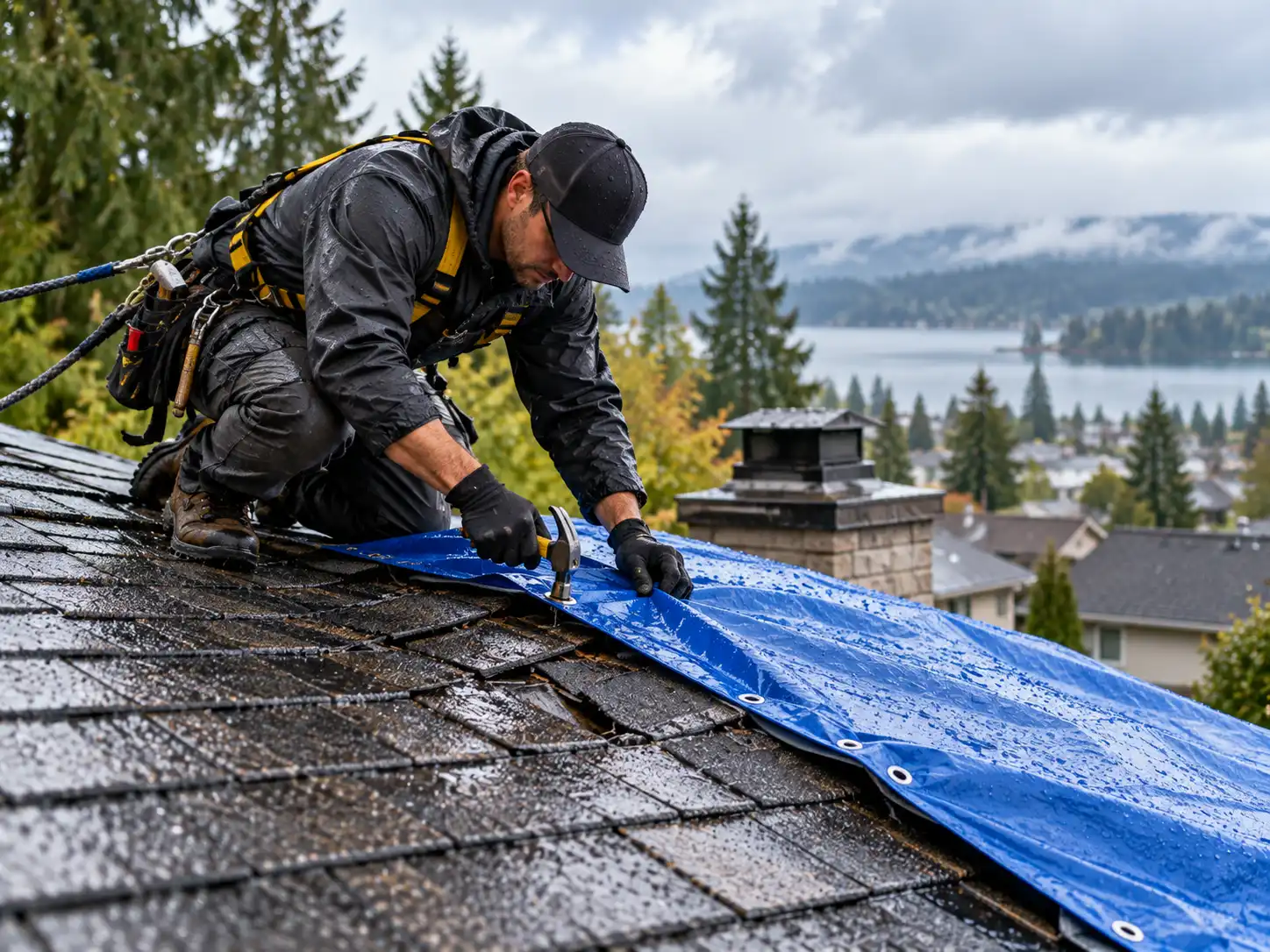
After major storms, homeowners should inspect their property from the ground for visible signs of impact. If you suspect tree-related damage, a professional roof repair service can determine whether repairs are needed.
Leaves and Debris Create Moisture Problems
Trees naturally shed leaves, bark, and small branches throughout the year. When this debris collects on your roof, it can trap moisture against roofing materials.
Constant moisture exposure can contribute to:
- Shingle deterioration
- Moss and algae growth
- Rotting roof components
- Increased risk of leaks
Roof valleys, gutters, and areas beneath large tree branches are especially vulnerable because debris tends to accumulate in these locations.
Why Overhanging Branches Are a Roofing Concern
Branches extending directly over your roof may seem harmless, but they can create several long-term issues.
Shingle Damage from Constant Contact
When branches rub against shingles during windy conditions, they can wear away protective granules. These granules help protect asphalt shingles from sunlight and weather exposure.
Over time, repeated friction can shorten the lifespan of roofing materials and leave areas more vulnerable to water damage.
Increased Pest Access
Branches touching or hanging close to the roof can provide pathways for animals such as squirrels and rodents to reach your attic. Once inside, pests can damage insulation, wiring, and other home components.
Reduced Sunlight and Increased Moisture
Large tree canopies create shaded areas where roofs dry more slowly after rainfall. These damp conditions encourage moss and algae growth, which can negatively affect roofing materials.
According to the United States Department of Agriculture (USDA), proper tree care and maintenance help protect both trees and surrounding property. Managing tree growth around structures is an important part of responsible property maintenance.
Step-by-Step Guide to Protecting Your Roof from Trees
Maintaining a safe distance between trees and your roof requires regular attention and preventative care.
1. Inspect Trees Around Your Property
Walk around your home and look for branches that extend toward your roof, weak limbs, or trees that appear unhealthy.
Pay attention to:
- Dead branches
- Cracked limbs
- Trees leaning toward the home
- Branches touching roofing materials
Identifying risks early can help prevent emergency repairs after storms.
2. Trim Overhanging Branches
Professional tree trimming can reduce the chance of branches falling onto your roof and improve airflow around the roofing system.
Avoid removing large branches yourself, especially near power lines or steep roof areas. Improper trimming can create safety risks and damage the tree.
3. Clean Gutters and Roof Areas Regularly
Remove leaves and debris from gutters to ensure proper water drainage. Clogged gutters can cause water to overflow and collect around roofing edges.
Regular cleaning is especially important during seasons when trees shed heavily.
4. Schedule Routine Roof Inspections
A roofing professional can identify damage that may not be visible from the ground, including lifted shingles, damaged flashing, and moisture intrusion.
Regular inspections are especially valuable for homes surrounded by mature trees.
Homeowners can review completed Maze Roofing projects to see examples of professional roofing work across different property conditions.
Essential Tree and Roof Maintenance Tasks
| Maintenance Task | Purpose | Recommended Action |
| Tree trimming | Reduces branch contact and falling limb risks | Schedule professional trimming when branches approach the roof |
| Gutter cleaning | Prevents moisture buildup | Remove leaves and debris regularly |
| Roof inspections | Detects hidden damage | Schedule inspections after storms or annually |
| Storm assessments | Identifies impact damage | Have damaged areas professionally evaluated |
Common Mistakes Homeowners Make With Trees Near Roofs
Allowing Branches to Touch the Roof
Branches that constantly contact shingles can cause gradual wear and create openings where water can enter.
Ignoring Tree Debris Buildup
Leaves and small branches may seem harmless, but trapped moisture can accelerate roof deterioration.
Waiting Until After a Storm to Check Damage
Tree-related damage is easier and less expensive to address when discovered early. Waiting until a leak appears can allow water damage to spread.
Removing Large Branches Without Proper Equipment
DIY tree removal near a roof can be dangerous. Falling branches can injure people and cause additional property damage.
Skipping Roof Inspections
Homeowners may not notice missing shingles, damaged flashing, or small leaks caused by trees until significant damage occurs.
Property owners can review Maze Roofing’s service areas to see where professional inspections and roofing services are available.
Protect Your Roof from Tree Damage with Maze Roofing
Trees are an important part of many properties, but without proper maintenance, they can become a serious threat to your roofing system. Falling branches, trapped moisture, and hidden damage can shorten roof lifespan and lead to costly repairs.
Learn more about Maze Roofing and its approach to inspections, repairs, and long-term roof protection.
Maze Roofing helps homeowners identify and address roof problems caused by storms, trees, and everyday wear. Visit Maze Roofing to learn more about available roofing solutions.
If your home is surrounded by large trees or you notice signs of damage, contact Maze Roofing for a professional roof inspection and reliable repair recommendations. Protecting your roof today can help prevent bigger problems tomorrow.
Frequently Asked Questions (FAQ)
How far should trees be from a house roof?
Ideally, tree branches should be kept several feet away from roofing materials to reduce contact, debris buildup, and storm-related damage. The exact distance depends on tree size, growth patterns, and local conditions.
Can tree leaves damage a roof?
Yes. Leaves can trap moisture, block drainage systems, and contribute to moss or algae growth when left on the roof for extended periods.
Should I remove trees near my house?
Not necessarily. Healthy trees can remain near homes when properly maintained. Regular trimming and inspections can reduce many potential risks.
Can tree branches cause roof leaks?
Yes. Falling branches can puncture roofing materials, while constant branch contact can damage shingles and create areas where water enters.
How often should I inspect my roof if I have large trees nearby?
Homes surrounded by mature trees should generally receive regular roof inspections, especially after severe storms or periods of heavy debris accumulation.