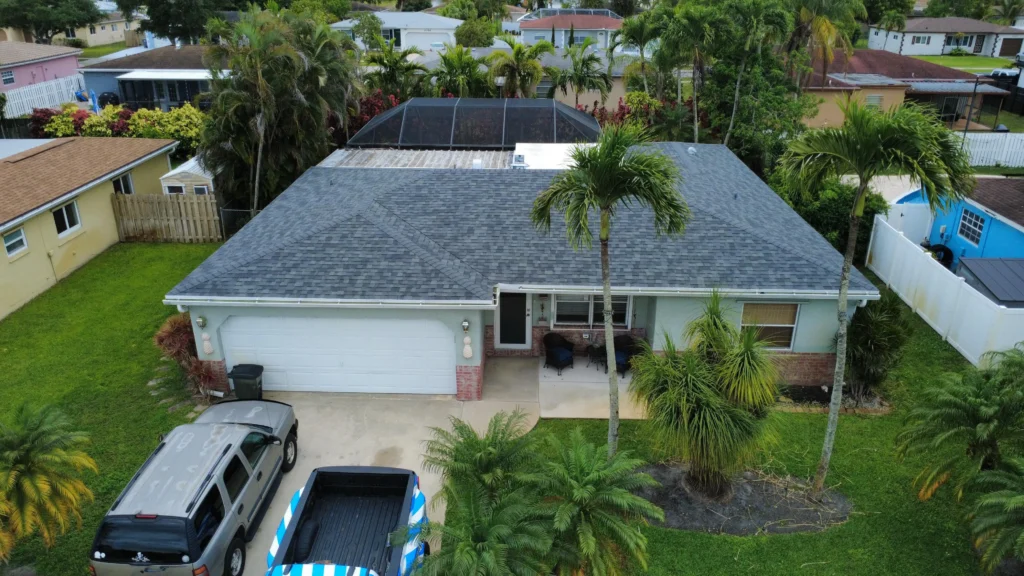
A full residential shingle roof replacement in Miami, documenting the critical preparation stages from tear-off and deck inspection through underlayment installation and preparation for the finished roofing system.
The Challenge
Where the roof started
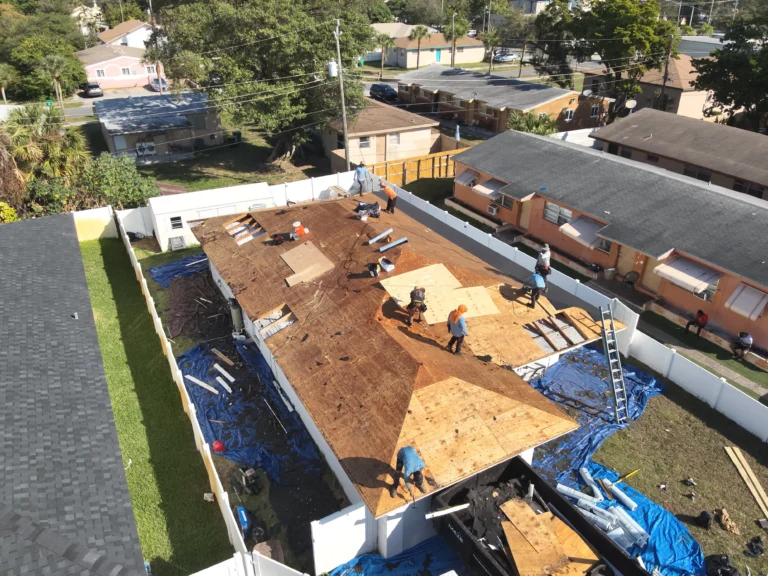
The existing roofing system required a full tear-off so the underlying deck could be inspected and repaired before the new roof assembly was installed. The project also required careful protection of the property and reliable secondary water protection for Miami weather.
Aging roofing materials required complete removal
Exposed decking needed a detailed condition assessment
The new system required strong protection against wind-driven rain
Scope Of Work
What we did
Full tear-off of the existing roofing system
Inspection and replacement of damaged roof decking as needed
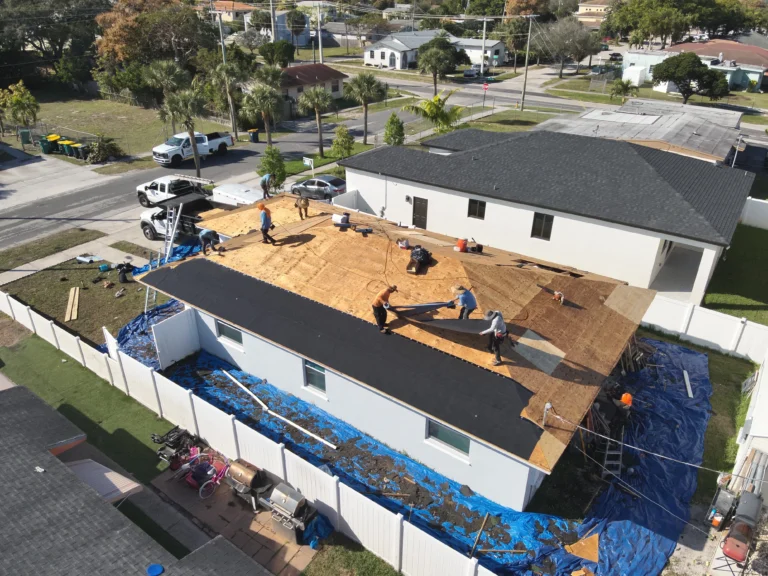
Installation of synthetic underlayment and secondary water protection
Detailed flashing around transitions and penetrations
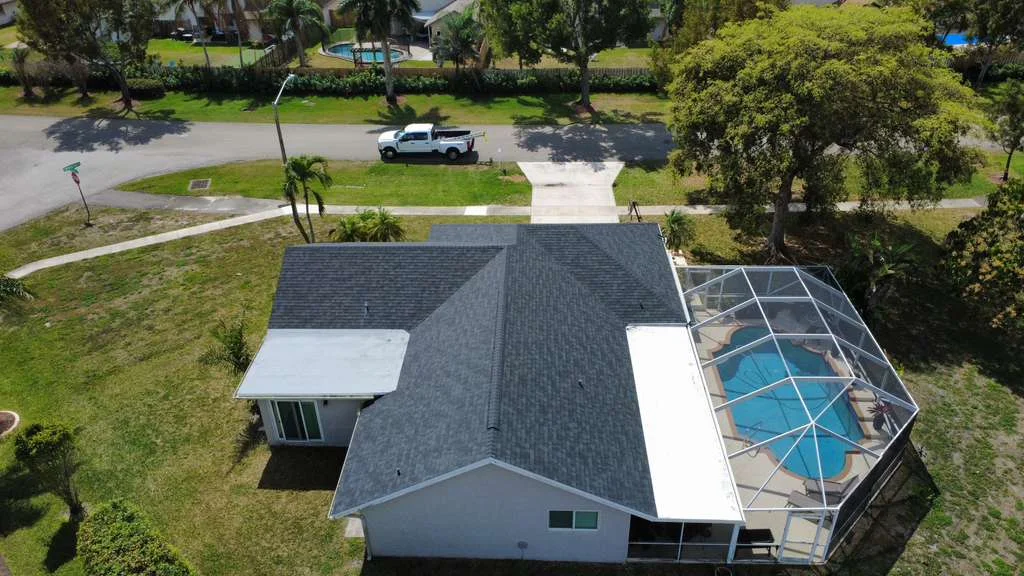
Preparation for architectural shingles, ridge ventilation and final detailing
Materials & System
What was installed
Replacement roof decking as needed
Synthetic underlayment
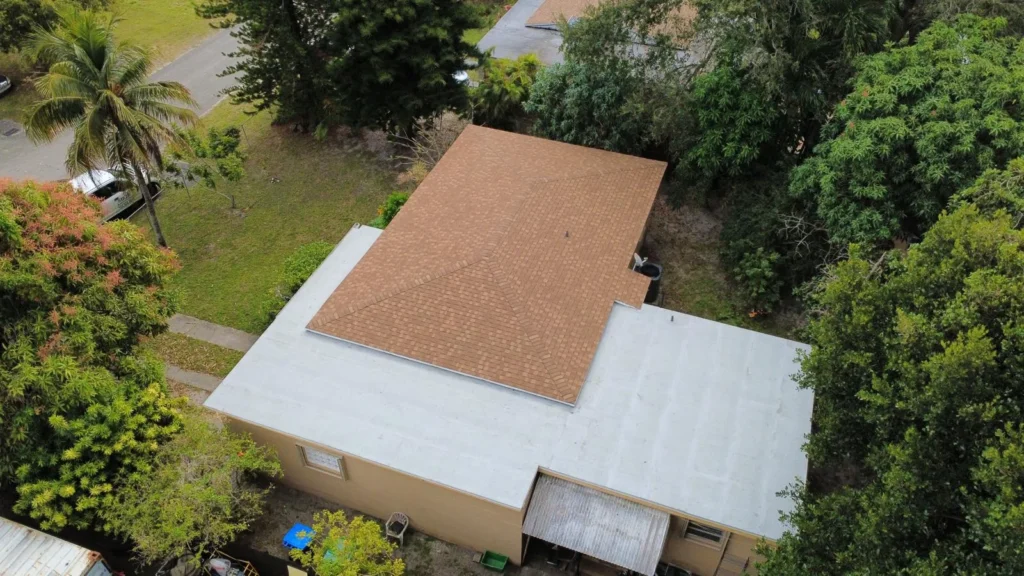
Architectural shingles
Flashing and ridge ventilation components
Gallery
On the roof
Tap any photo to enlarge
The Result
A roof rebuilt from the deck up
The documented work shows the preparation required for a dependable shingle roof replacement. By addressing the deck, underlayment and vulnerable transition points before the finished roofing materials were installed, the new system received a stronger foundation for long-term performance in Miami's climate.
Project FAQ
Questions about this project
Why was a full tear-off needed for this project?
A full tear-off allowed the crew to inspect the roof deck, identify damaged areas and build the new roofing system on a stable and properly prepared surface.
What happens when damaged decking is found?
Damaged or weakened decking is replaced as needed before the underlayment and finished roofing system are installed.
Why is underlayment important for a Miami roof?
Underlayment provides a secondary water barrier beneath the shingles and helps protect the roof during heavy rain and wind-driven storms.