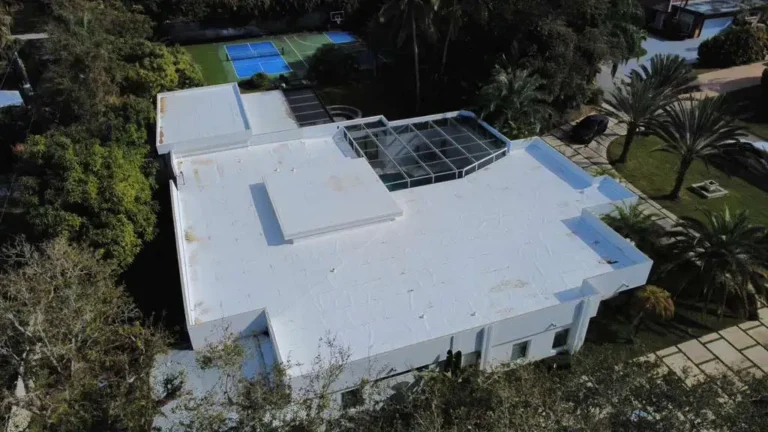
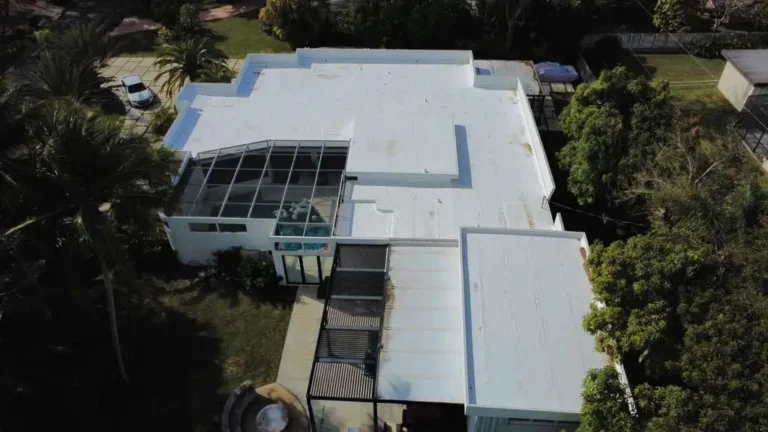
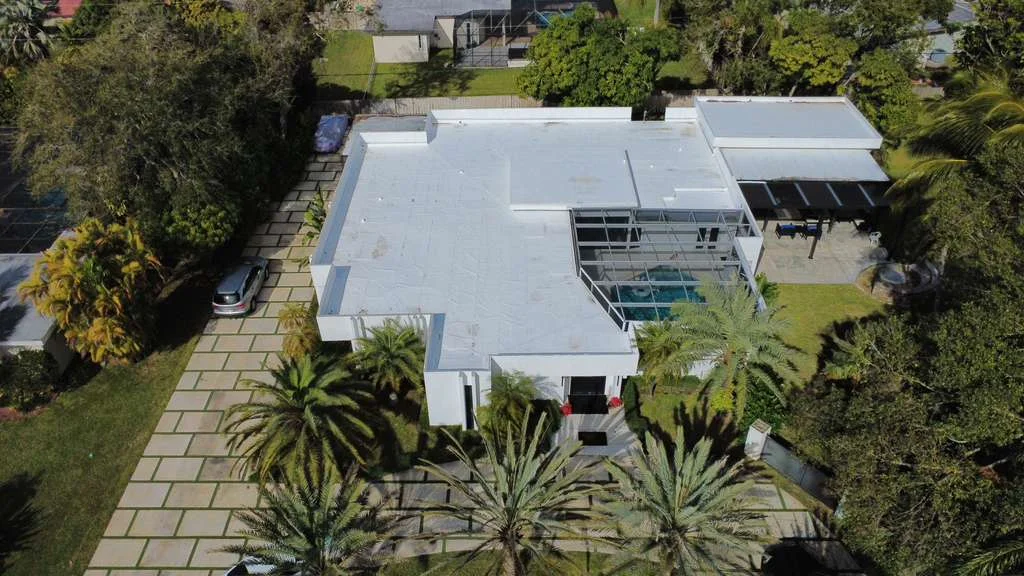
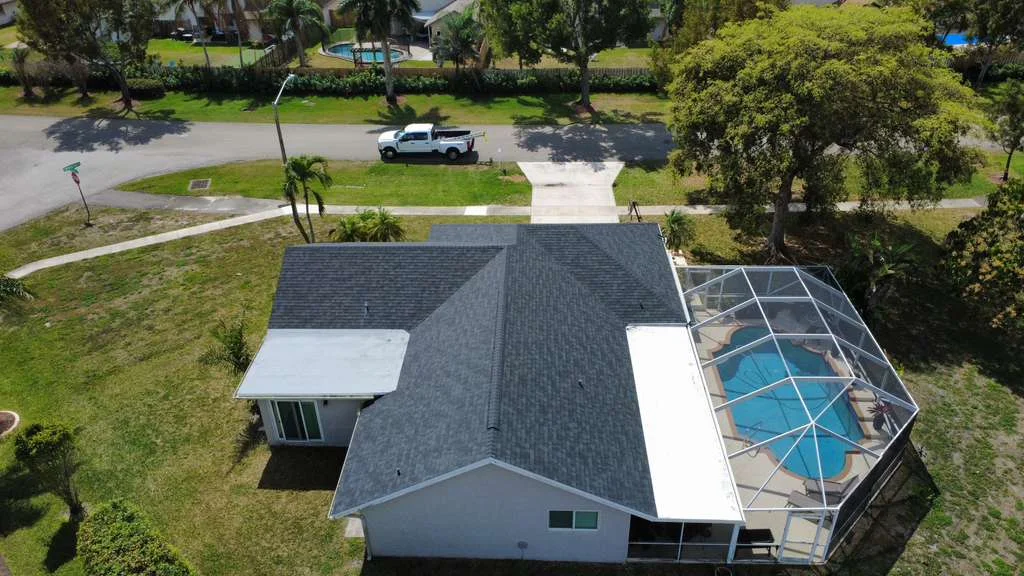
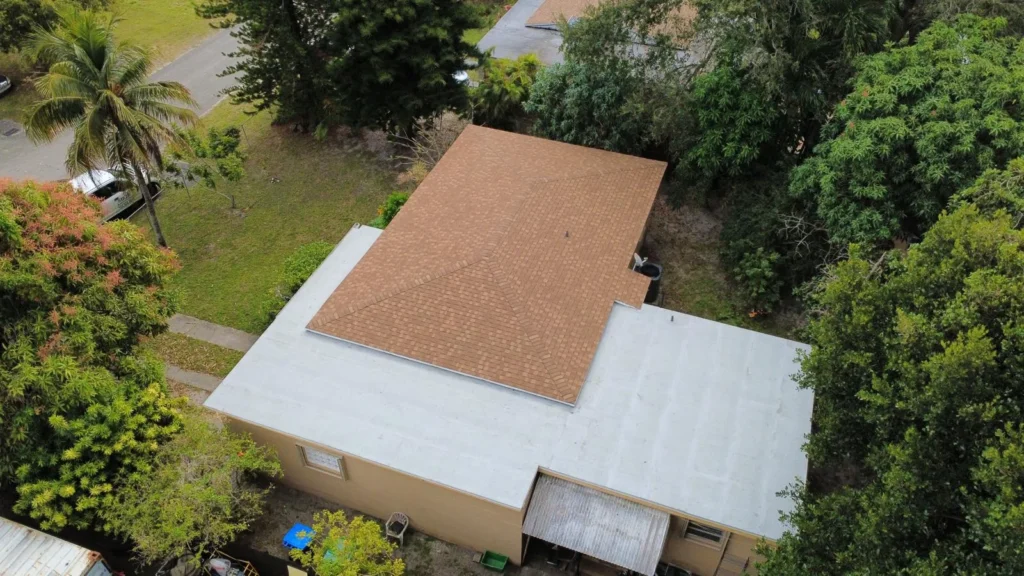
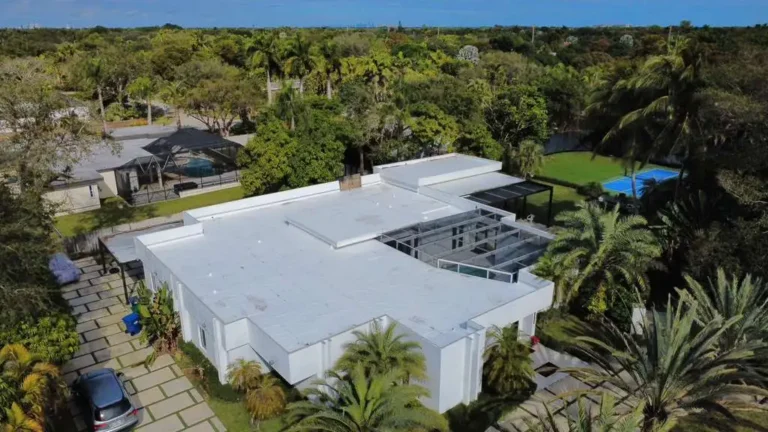
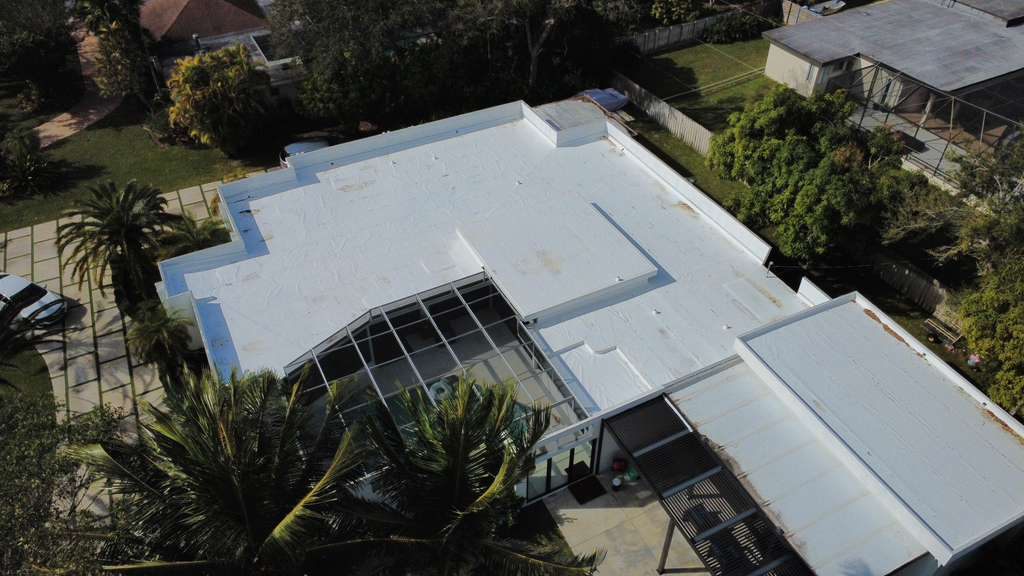
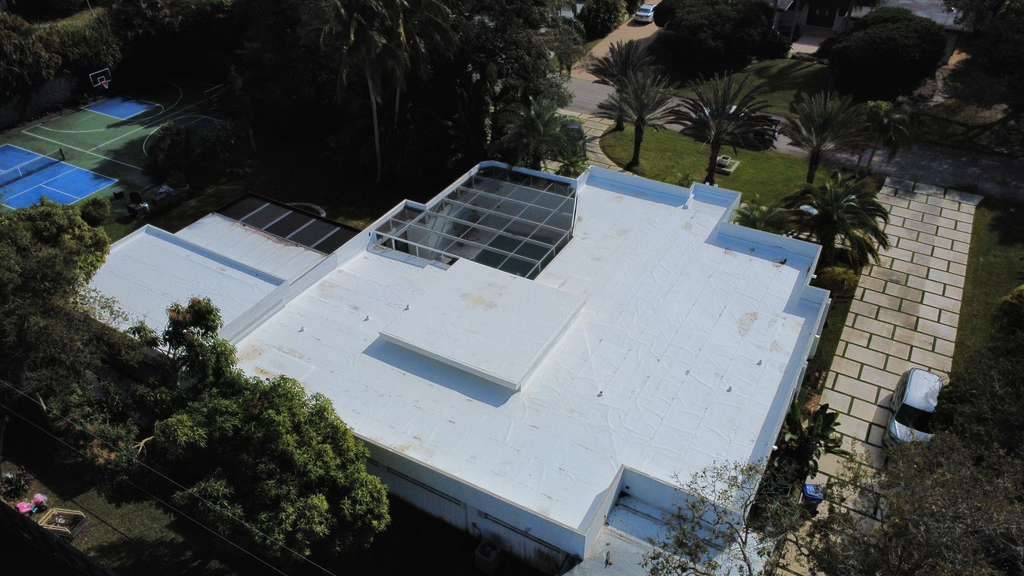
A white TPO roofing system installed on a large residential property in Cutler Bay, providing a clean, reflective and weather-resistant surface for the home's flat and low-slope roof areas.
The Challenge
Where the roof started
The property required a continuous roofing membrane capable of handling intense sunlight, high humidity, heavy rainfall and the drainage demands of a large flat roof.
High UV and heat exposure throughout the year
Flat roof areas required dependable waterproofing
Seams, penetrations and drainage points required precise detailing
Scope Of Work
What we did
Evaluation and preparation of the existing roof surface
Installation of the white TPO membrane
Secure alignment and heat welding of membrane seams
Detailed flashing around penetrations, edges and transitions
Inspection of drainage areas and the completed roof surface
Materials & System
What was installed
White reflective TPO membrane
Heat-welded membrane seams
Compatible edge and flashing components
Sealed penetrations and drainage detailing
Gallery
On the roof
Tap any photo to enlarge
The Result
A bright, reflective roof built for South Florida
The completed TPO system provides a clean and continuous roofing surface designed to resist moisture and reflect a greater amount of solar heat. Careful seam, edge, penetration and drainage detailing helps the roof perform as one complete system.
Project FAQ
Questions about this project
Why was TPO selected for this Cutler Bay property?
TPO is well suited to flat and low-slope roof areas because it provides a continuous waterproofing membrane and a reflective surface for hot climates.
How are TPO seams sealed?
TPO membrane seams are heat welded to create strong and continuous connections between adjoining sheets.
Does a white TPO roof help with heat exposure?
Its reflective surface can reduce solar heat absorption at the roof level, although overall building performance also depends on insulation, ventilation and the full roof assembly.