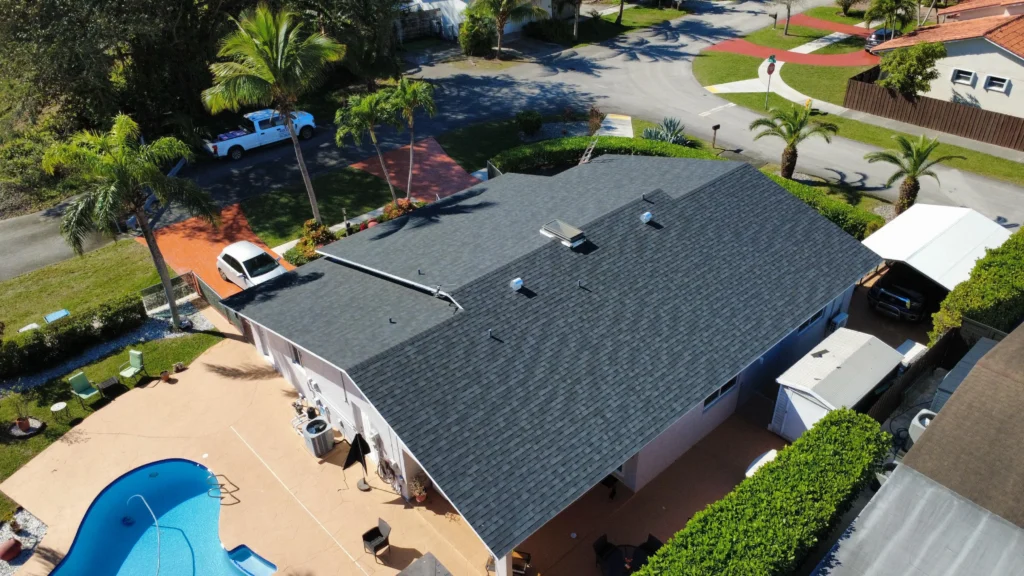
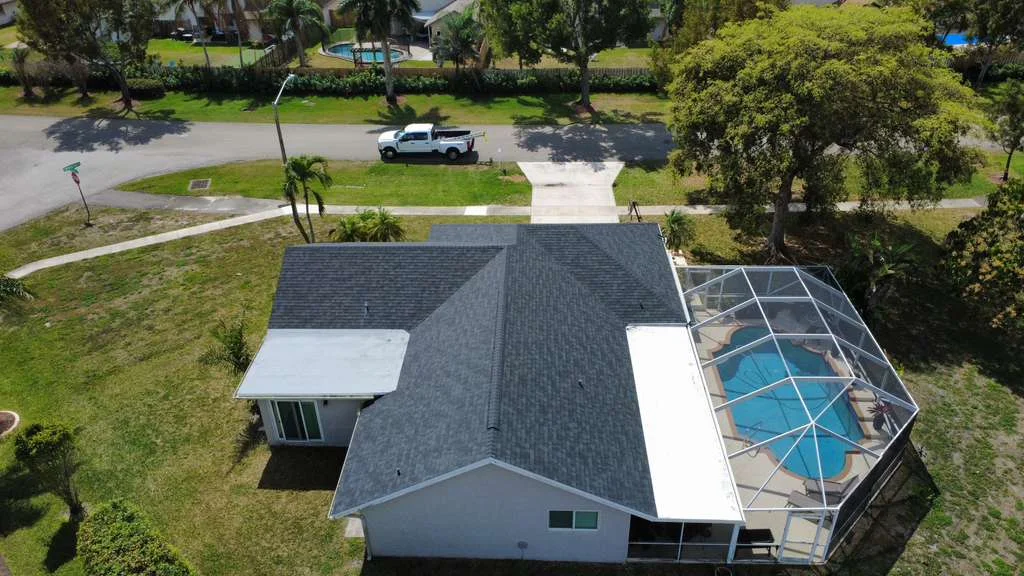
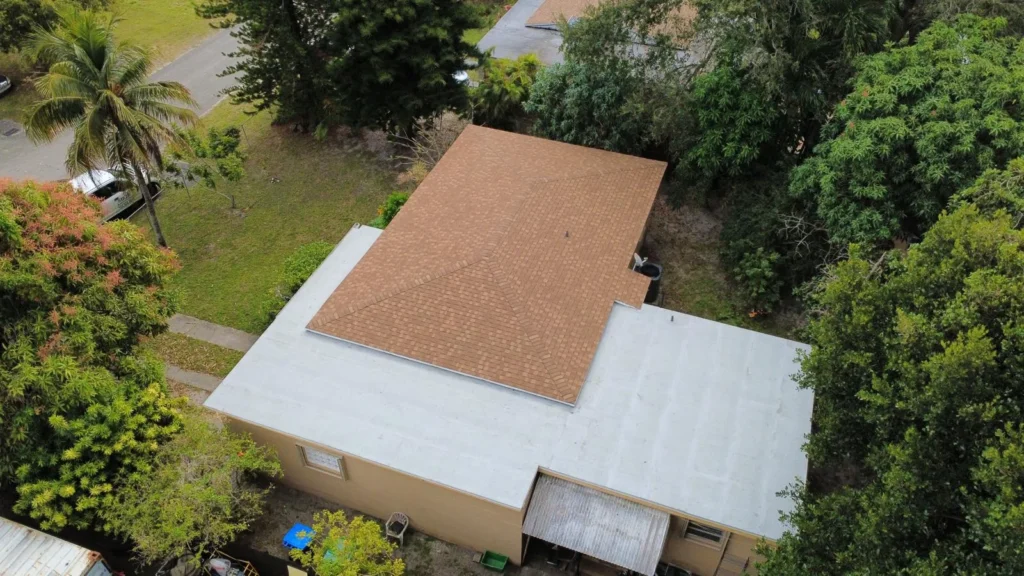
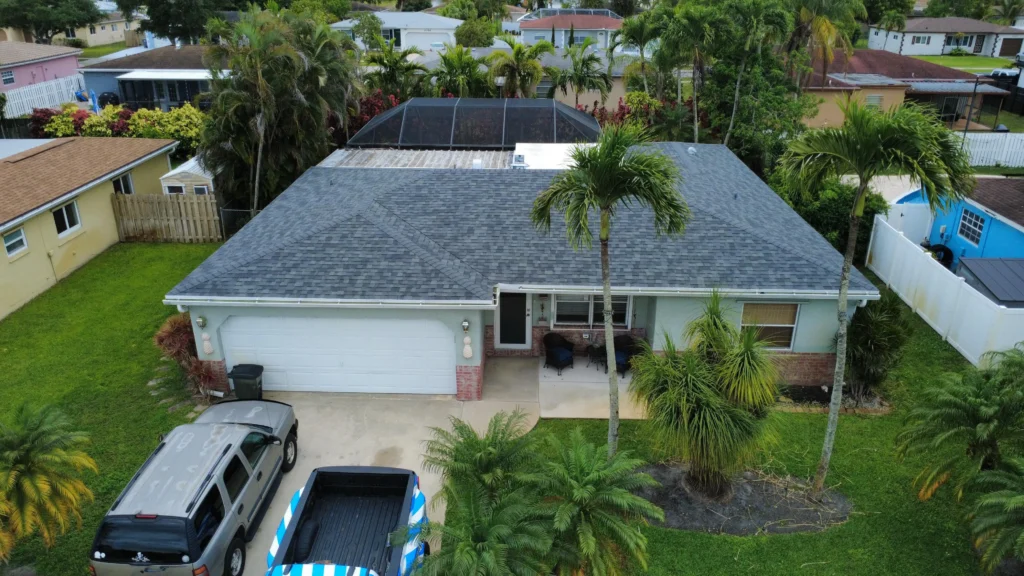
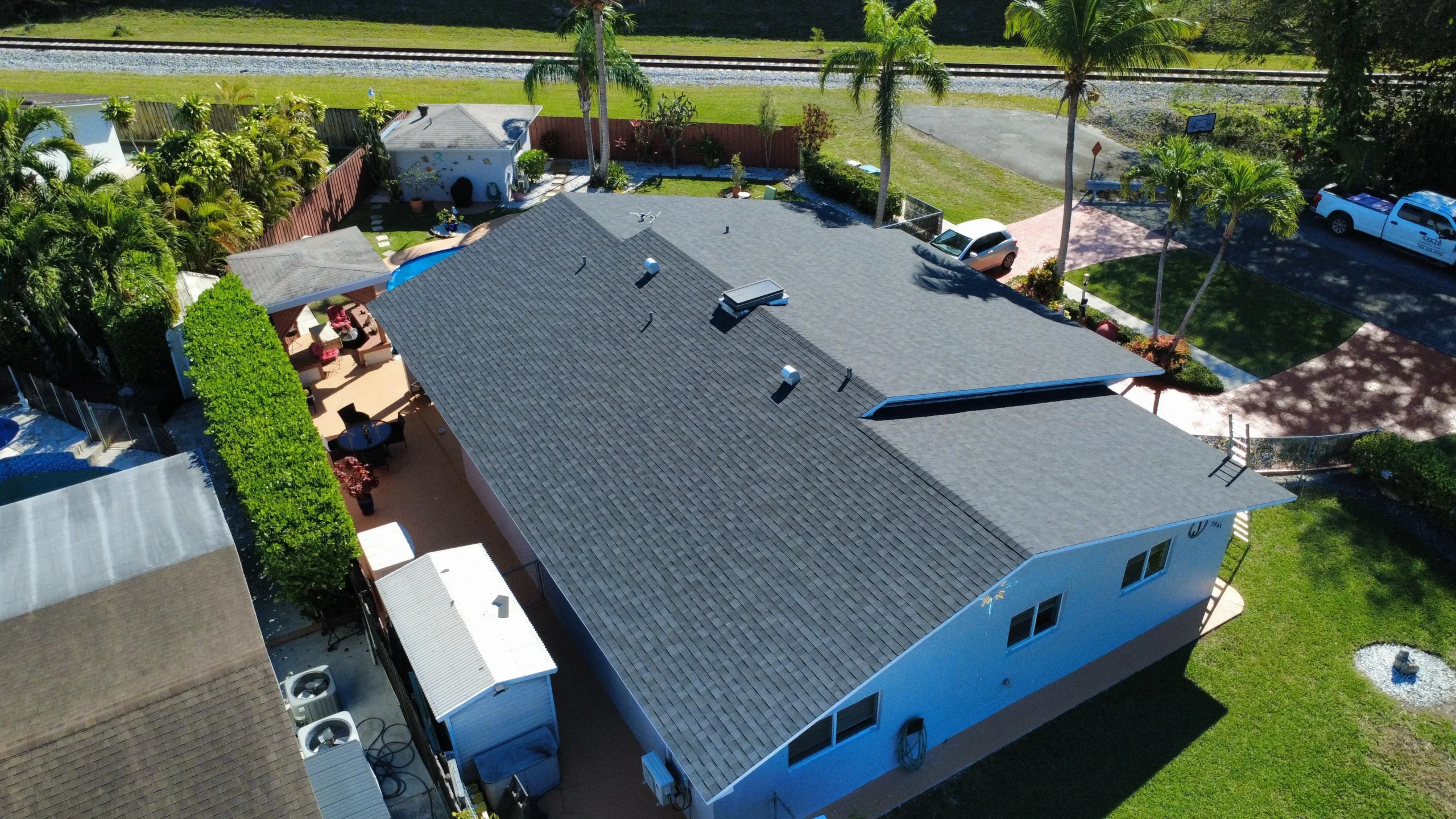
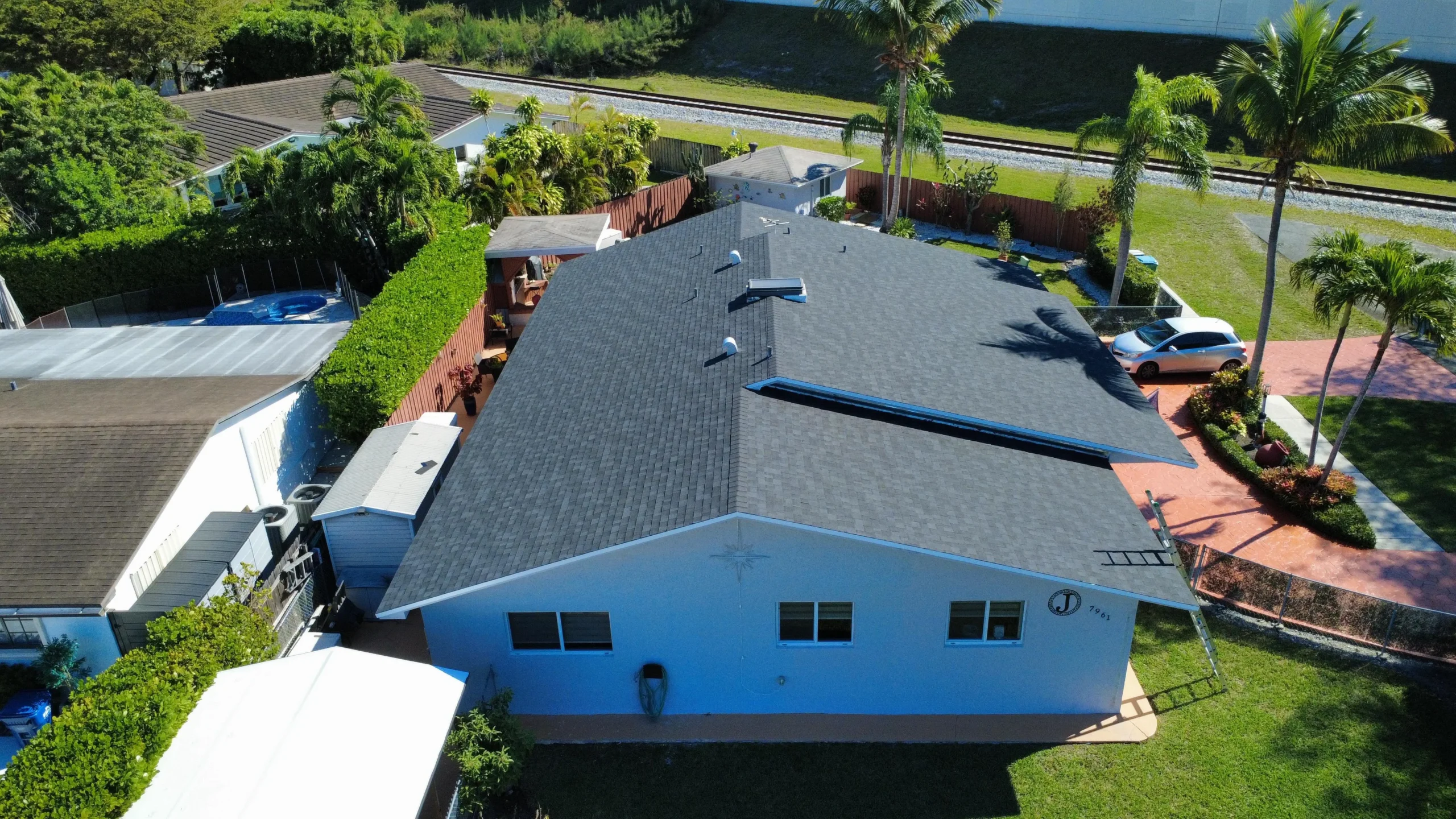
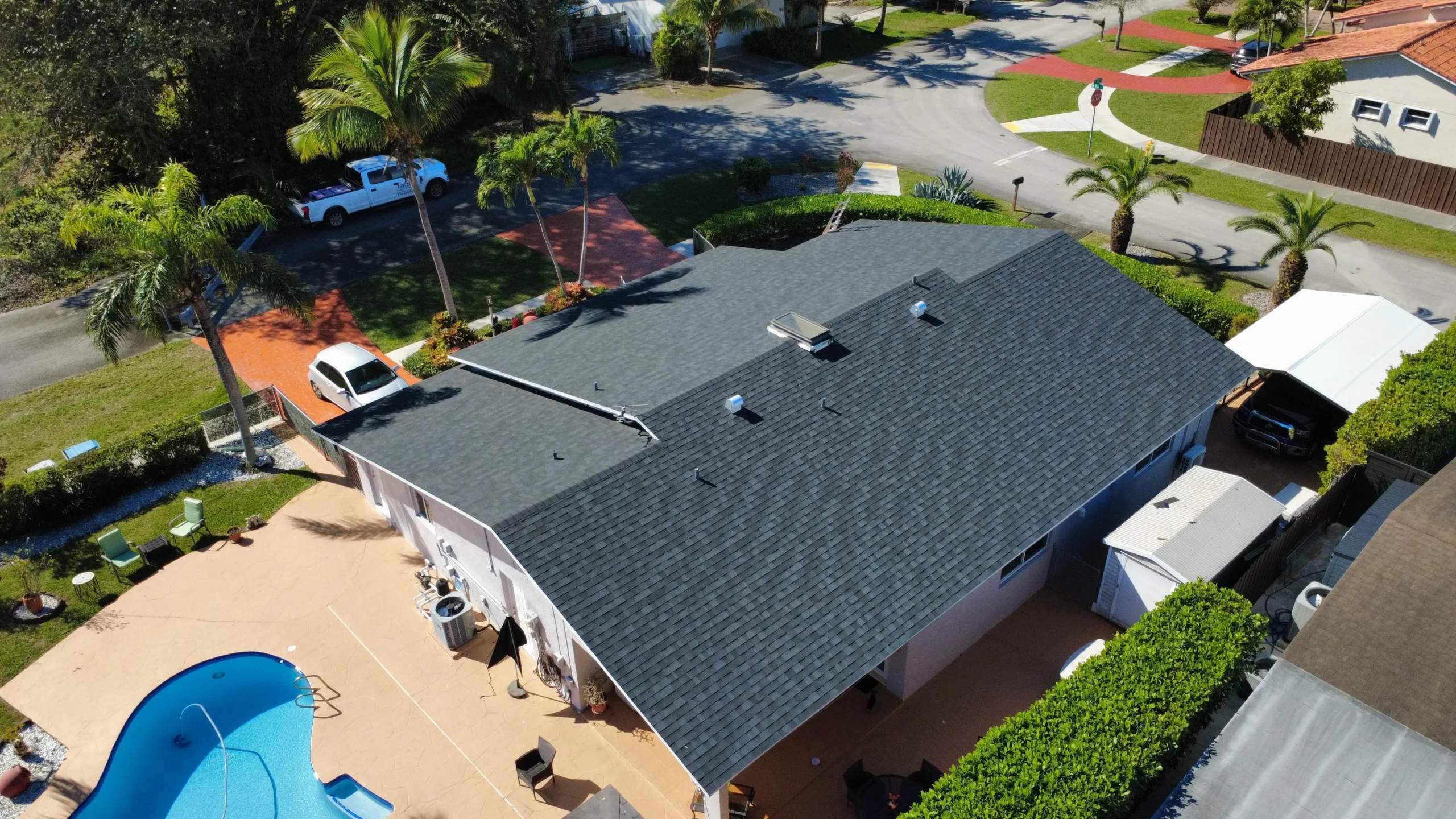
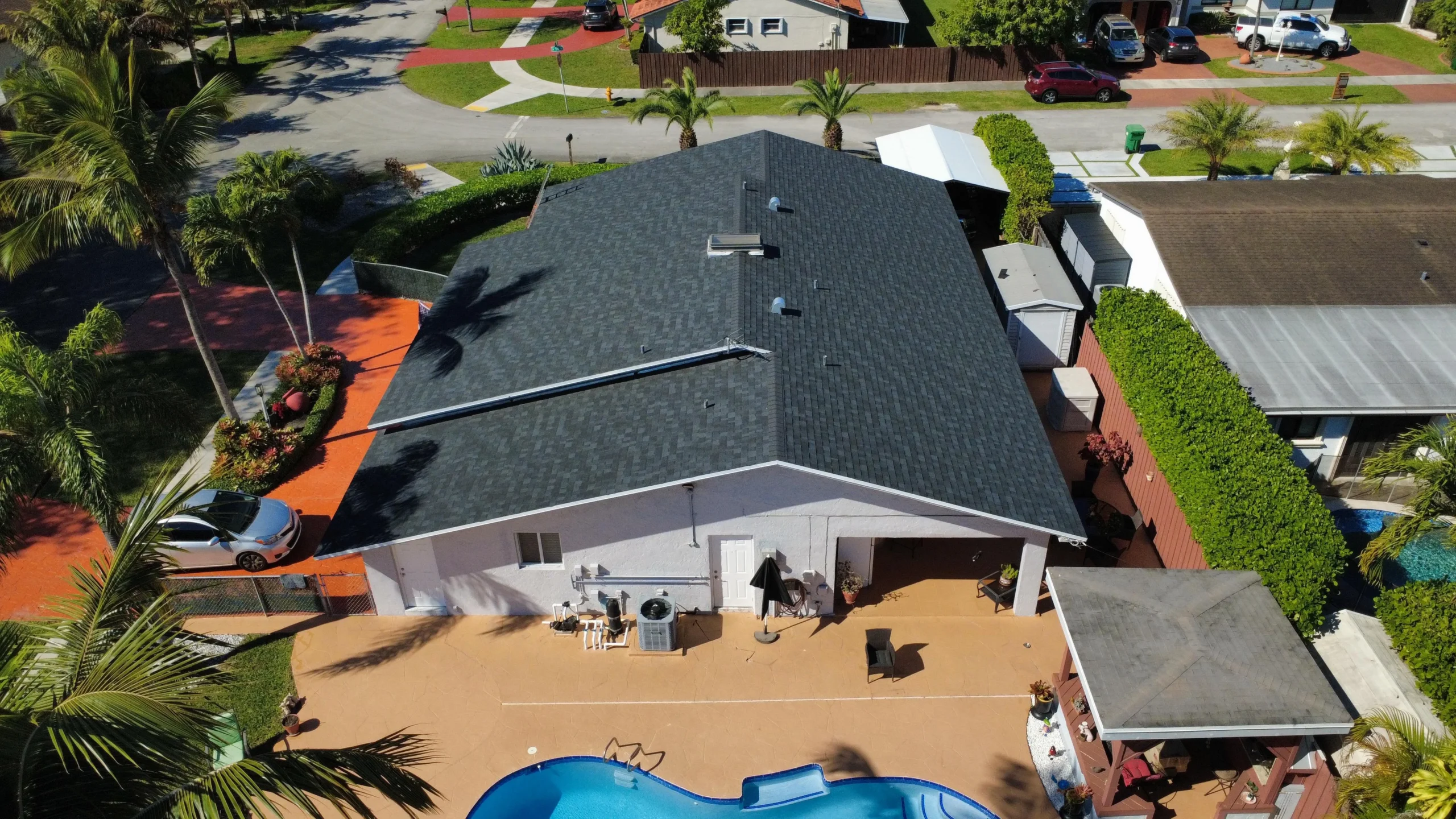
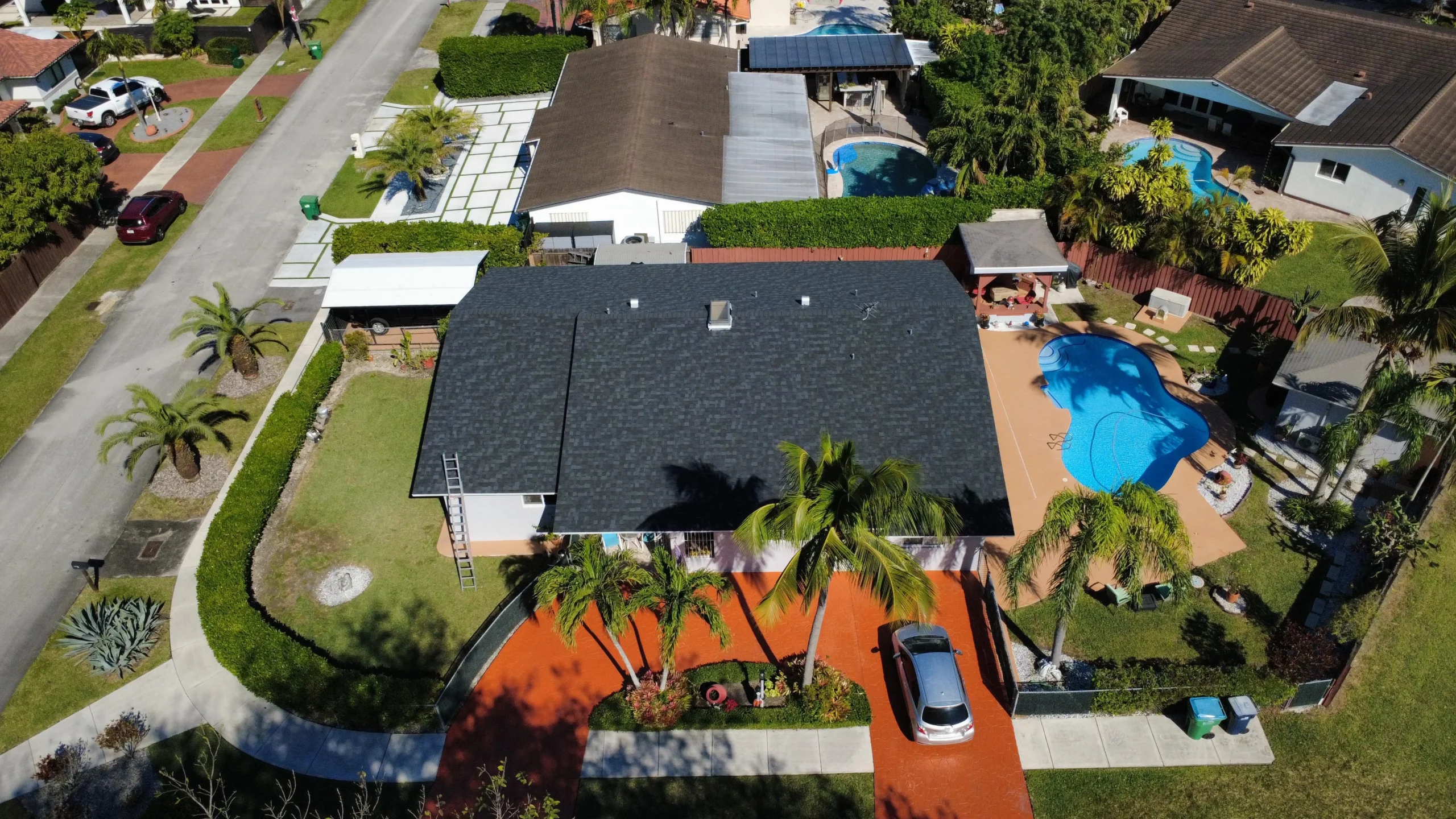
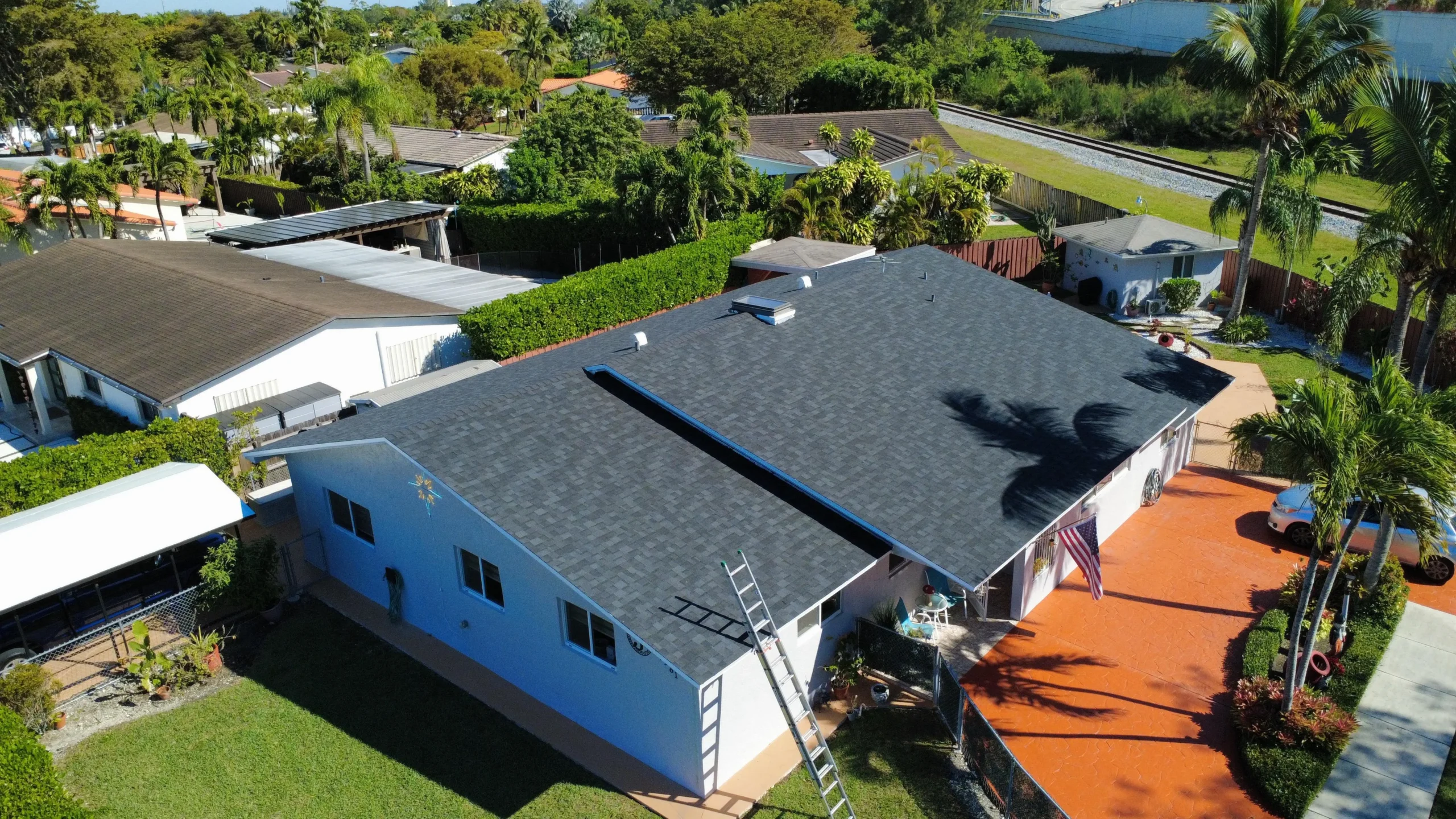
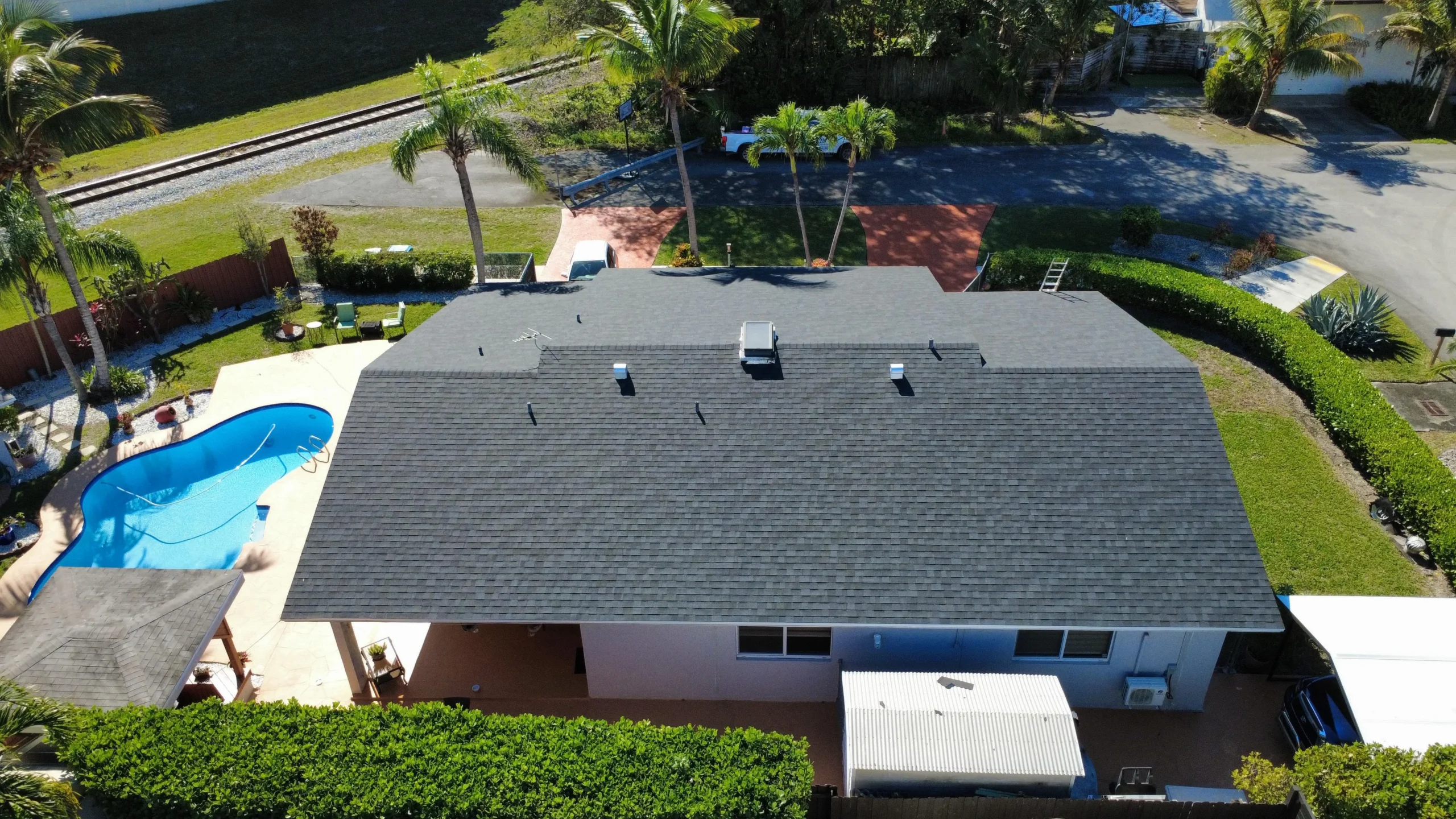
A high-performance residential shingle roof replacement completed on 94th Ave in Miami, FL 33173 (Sunset/Snapper Creek corridor). Custom-engineered to conform strictly to Miami-Dade High-Velocity Hurricane Zone (HVHZ) building mandates, this project upgraded an aging roof to a multi-layered architectural shingle system designed to resist high-velocity wind uplift, heavy tropical rainstorms, and intense year-round thermal heat.
The Challenge
Where the roof started
The previous roofing system on this property was showing severe wear from prolonged UV exposure and seasonal storm impacts, exhibiting heavy mineral granule loss, curled shingle edges, and failing flashing seams.
Aged shingles were losing their protective mineral layer, exposing the underlying fiberglass mat to rapid solar degradation
Strict Miami-Dade high-velocity wind codes required complete deck re-fastening prior to laying new underlayment
Trapped attic heat was putting extra strain on the home's cooling system and baking the existing roof deck from below
Scope Of Work
What we did
Perform a complete tear-off of old asphalt roof layers down to the structural plywood decking
Inspect wooden roof sheets, replacing damaged panels and re-nailing the sheathing with ring-shank nails to meet HVHZ uplift codes
Apply an HVHZ-compliant continuous secondary waterproof underlayment membrane over the deck
Install custom perimeter metal drip edges, high-wind starter shingle courses set in sealant, and pipe flashing collars
Precision-mount dimensional architectural shingles using a code-mandated 6-nail high-wind fastening pattern
An HVHZ-compliant shingle roof engineered for maximum storm resilience
This Miami home now features an airtight, multi-layered architectural shingle envelope that significantly enhances exterior visual appeal, lowers attic heat retention, and provides full structural confidence through South Florida's severe weather seasons.
Project FAQ
Questions about this project
What makes architectural shingles HVHZ-approved for Miami 33173?
HVHZ approval requires shingles to pass rigorous lab tests for wind uplift and tear resistance, paired with a mandatory 6-nail attachment schedule and Miami-Dade certified starter courses.
How does an updated secondary water barrier protect my home during a storm?
A secondary water barrier remains sealed directly to the roof deck even if surface shingles are lifted by strong winds, stopping wind-driven rain from penetrating into the interior.
Can a new shingle roof help lower energy bills in South Florida?
Yes. Modern dimensional shingles paired with continuous ridge ventilation allow trapped hot air to escape from the attic, lowering internal roof temperatures and reducing air conditioner strain.