
A sudden roof leak can quickly turn into a serious problem if it is not addressed immediately. Whether caused by severe weather, damaged shingles, failing flashing, clogged drainage systems, or aging roofing materials, unexpected water intrusion can damage ceilings, insulation, electrical components, and personal belongings inside your home.
When water starts entering your home, the first priority is protecting your family and minimizing interior damage. While temporary solutions can help reduce the impact, a leaking roof requires professional attention to identify the source and prevent recurring problems.
Taking quick action can make the difference between a minor repair and extensive structural damage. If you are dealing with an active roof leak, scheduling an immediate roof repair service can help protect your home and restore proper protection.
Key Takeaways
- Act Quickly: Addressing a roof leak early helps reduce water damage and prevents problems from spreading.
- Protect Interior Spaces: Move belongings, contain water, and reduce exposure to affected areas while waiting for repairs.
- Avoid Unsafe Roof Access: Wet roofs are dangerous, especially during storms or severe weather conditions.
- Identify the Source: The visible leak inside your home may not be directly below the actual roof damage.
- Professional Repairs Prevent Recurring Issues: A roofing expert can locate the cause and provide a lasting solution.
Why Sudden Roof Leaks Happen
Roof leaks can develop for many reasons, and the source is not always obvious. Water often travels along roof decking, insulation, and structural components before appearing inside your home.
Common causes of sudden roof leaks include:
- Storm damage from wind, hail, or falling debris
- Missing or damaged shingles
- Cracked roof flashing
- Damaged roof underlayment
- Clogged gutters causing water backup
- Aging roofing materials
- Poor previous repairs
According to the Federal Emergency Management Agency (FEMA), taking immediate steps to reduce additional damage after a disaster or severe weather event is an important part of protecting your property.
Understanding the cause of a leak is essential because simply patching the visible area may not solve the underlying problem.
Immediate Steps to Take When Your Roof Starts Leaking
When water enters your home unexpectedly, quick action can help limit damage while you arrange professional repairs.
1. Protect Your Belongings and Interior Areas
Move furniture, electronics, and valuable items away from the affected area. Place buckets or containers under active drips to collect water and reduce damage to flooring.
If water is spreading near electrical outlets, light fixtures, or wiring, avoid touching affected areas and consider turning off electricity to the impacted section if it can be done safely.
2. Document the Damage
Take photos and videos of:
- The leak location
- Interior water damage
- Visible roof damage from the ground
- Damaged belongings
Documentation can help with insurance claims and provides useful information for roofing professionals when evaluating the issue.
3. Check the Attic If It Is Safe
If conditions are safe, inspect the attic for signs of moisture. Look for:
- Wet insulation
- Dark stains on roof decking
- Water trails
- Mold-like odors
Remember that water can travel away from the original entry point, so the location inside your home may not match the exact roof problem.
4. Use Temporary Protection When Possible
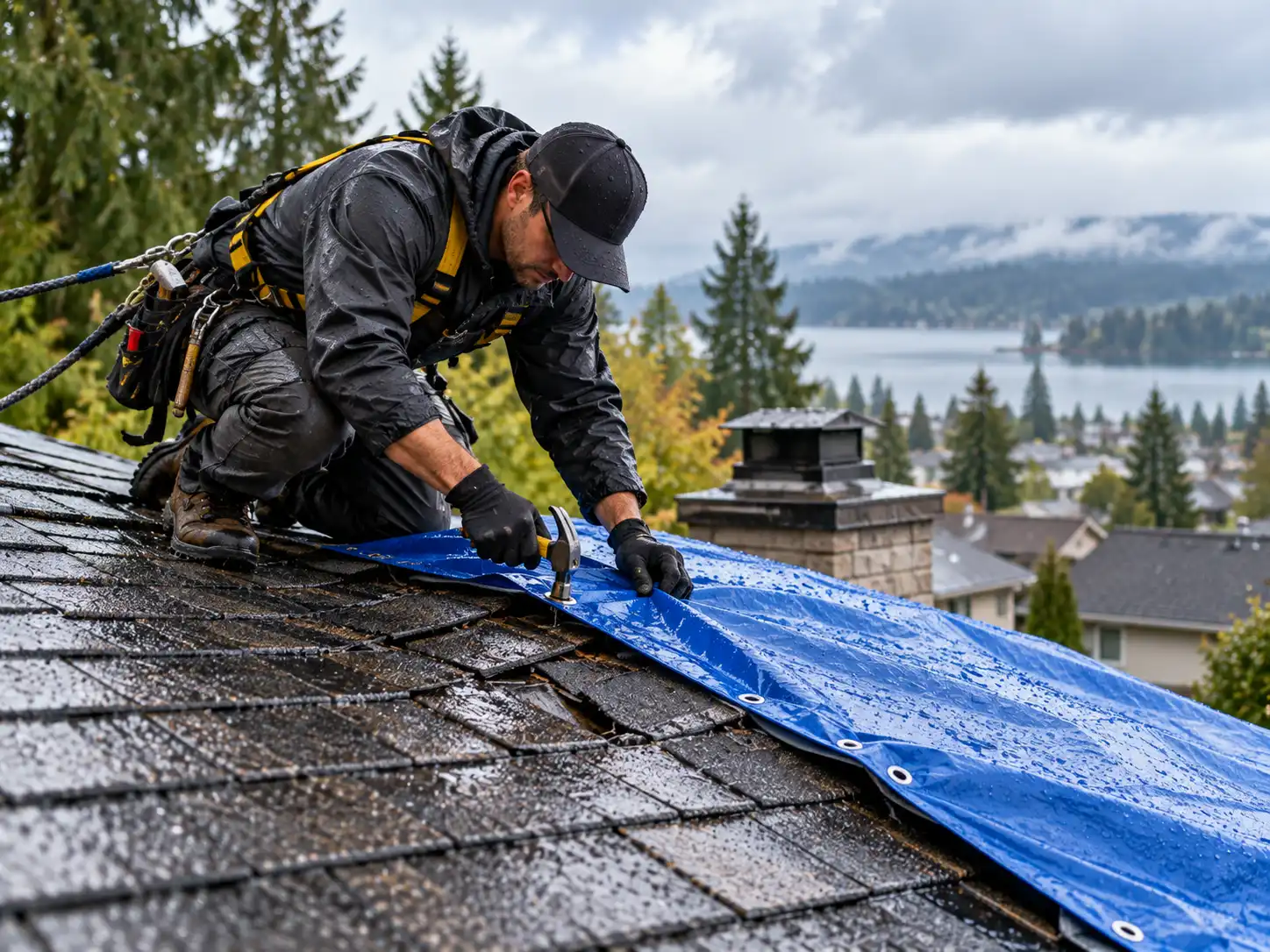
Temporary measures, such as placing a tarp over damaged areas, can help reduce additional water intrusion until permanent repairs are completed.
However, homeowners should avoid climbing onto wet or damaged roofs. According to OSHA, working at height requires proper fall protection and safety procedures.
Common Causes of Emergency Roof Leaks
Storm and Wind Damage
Severe weather can remove shingles, damage flashing, or create openings where rainwater enters the roofing system.
After storms, homeowners should look for visible warning signs from the ground and arrange a professional inspection.
Damaged Flashing
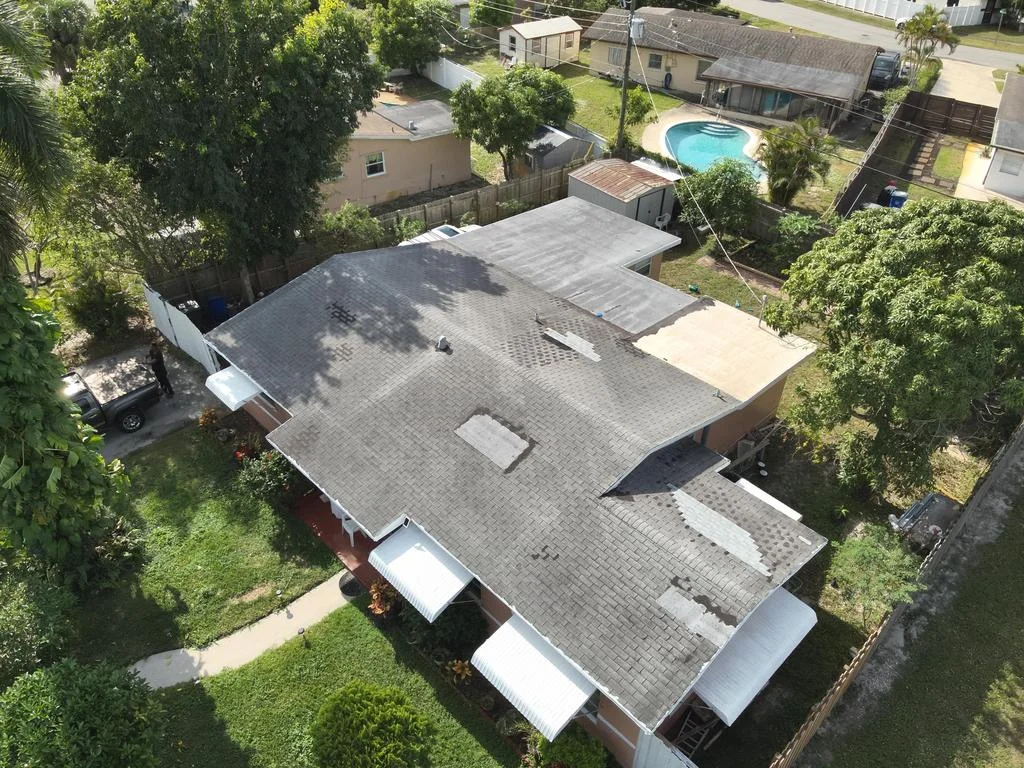
Flashing protects areas where roofing materials meet structures such as chimneys, walls, and vents. When flashing cracks, separates, or becomes loose, water can enter through these vulnerable points.
Clogged Gutters
Blocked gutters prevent water from draining properly. When water backs up along roof edges, it can seep beneath shingles and cause leaks.
Aging Roofing Materials
As roofs age, shingles can become brittle, flashing may deteriorate, and protective layers may weaken. Older roofs are more vulnerable to unexpected leaks.
Step-by-Step Process for Handling a Roof Leak
Step 1: Locate Signs of Water Intrusion
Start inside the home by identifying where water is entering. Look for stains, dripping water, or damp areas.
Do not assume the visible leak location is directly beneath the roof damage.
Step 2: Inspect the Roof From the Ground
Use caution and avoid climbing onto a damaged roof. Look for:
- Missing shingles
- Damaged flashing
- Fallen branches
- Visible holes
- Sagging areas
Step 3: Contact a Roofing Professional
A roofing expert can safely inspect the roof, identify the source of the leak, and recommend the appropriate repair.
Step 4: Complete Permanent Repairs
Temporary solutions may prevent additional damage, but permanent repairs are necessary to restore your roof’s protection.
Temporary vs. Permanent Roof Leak Solutions
| Solution | Purpose | Long-Term Protection |
| Bucket placement | Collects dripping water indoors | Does not repair the leak |
| Roof tarp | Temporary weather protection | Requires permanent repair afterward |
| Sealant patch | May reduce minor water entry | Not suitable for major damage |
| Professional roof repair | Fixes underlying cause | Restores roofing performance |
Common Mistakes to Avoid During a Roof Leak
Climbing Onto a Wet Roof
Wet roofing materials become extremely slippery. Attempting repairs during rain or storms can result in serious injuries.
Ignoring a Small Leak
Even minor leaks can damage insulation, decking, and interior structures over time.
Only Repairing Interior Damage
Painting over stains or replacing drywall does not solve the roofing problem causing water intrusion.
Using Temporary Fixes as Permanent Solutions
Tarps and sealants can provide short-term protection but are not replacements for proper roofing repairs.
Waiting Too Long to Call a Professional
Delaying repairs allows moisture damage to spread and can increase overall repair costs.
Stop Roof Leaks Before They Cause Major Damage With Maze Roofing
A sudden roof leak requires immediate attention to protect your home and prevent further damage. While temporary steps can help reduce water intrusion, finding and repairing the true source of the problem is essential for long-term protection.
Maze Roofing provides professional roof inspections, emergency repairs, and reliable roofing solutions to help homeowners restore their homes quickly and safely. If you are experiencing a roof leak or notice signs of water damage, contact us today for expert assistance and dependable repairs.
Frequently Asked Questions (FAQ)
What should I do first when my roof starts leaking?
First, protect your belongings, contain the water if possible, and move away from unsafe areas. Then contact a roofing professional to identify and repair the source.
Can I fix a roof leak myself?
Minor temporary measures may help reduce damage, but permanent roof repairs require proper tools, safety equipment, and experience.
Why does my ceiling leak when there is no visible roof damage?
Water can travel through roof layers before entering your home, meaning the actual source may be farther away from the visible interior leak.
Are sudden roof leaks covered by homeowners insurance?
Coverage depends on your policy and the cause of the damage. Storm-related damage is often handled differently than damage caused by maintenance issues.
How quickly should a roof leak be repaired?
Roof leaks should be addressed as soon as possible. Even small amounts of water can lead to mold growth, structural damage, and more expensive repairs.