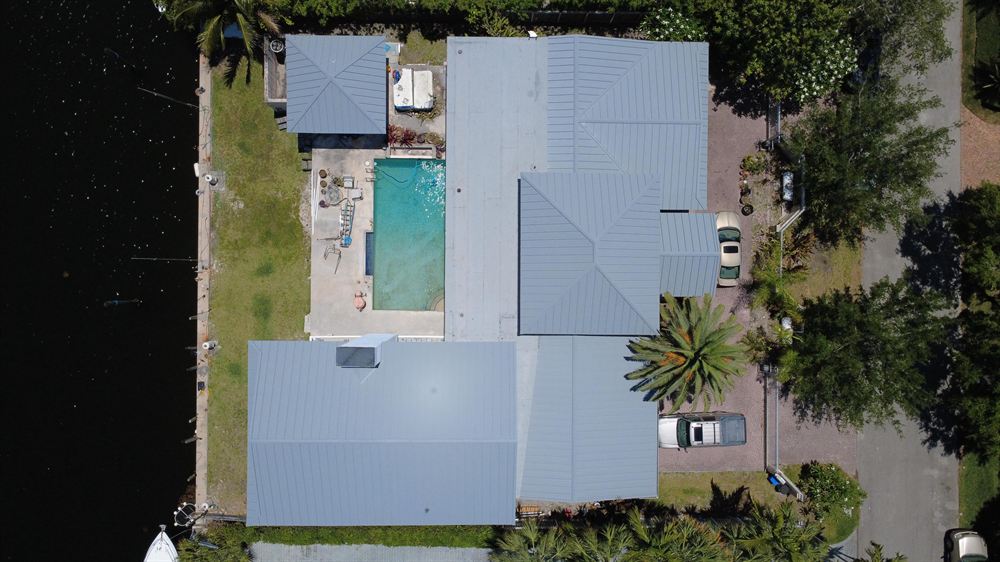
Salt air affects coastal roofs mainly by speeding up corrosion of metal parts. Wind carries tiny salt-containing droplets and particles inland from the ocean, and those chlorides settle on roofs, where moisture helps them attack fasteners, flashing, vents, and other exposed metal. The effect varies by location and roof. Distance from the water, wind patterns, the metal and its coating, and how often the roof is inspected and maintained all change how much corrosion actually occurs. This article focuses on Florida’s coastal markets and explains how to assess risk without overstating it.
Overview
This guide is for owners of coastal homes and small commercial properties in places like Fort Lauderdale, Miami, Miami Beach, Broward and Palm Beach counties, Pinellas County and Clearwater Beach, Fort Myers Beach, Sanibel, Naples, and Marco Island. It covers how salt exposure works, which roof components are most vulnerable, how material and coating choices matter, and what maintenance and inspections help. It does not give corrosion rates or lifespans, because those depend on too many site-specific factors.
What “Salt Air” Actually Means for a Roof
Salt air is shorthand for airborne chlorides: salt carried from breaking waves and sea spray by the wind. When those particles land on a roof and combine with moisture from rain, dew, or humidity, they form a conductive film that promotes corrosion of many metals. The FEMA technical bulletin on corrosion protection for metal connectors and fasteners in coastal areas notes that in coastal areas with moisture and humidity, salt spray has corroded metal connectors and fasteners, contributing to the loss of an adequate load path.
That finding reminds us that corrosion is not only cosmetic. Fasteners, clips, and connectors do structural work. When they weaken, the roof’s wind resistance weakens with them.
What Determines How Much Corrosion Occurs
Several factors work together, and no single one tells the story:
- Distance from the ocean: exposure generally decreases with distance, but wind direction and local geography can carry salt farther than people expect.
- Direct exposure vs. sheltered areas: rain can rinse some surfaces, while sheltered areas under eaves and around penetrations can hold salt deposits and moisture longer.
- Material and coating: different metals and finishes resist corrosion differently.
- Fasteners and accessories: a corrosion-resistant panel is only as durable as its screws, clips, and flashing.
- Maintenance and inspection: early repair of coating damage and sealant failure limits spread.
- Wind and weather patterns: onshore winds, storm surge and tropical weather can all add salt exposure.
Because of these variables, two roofs in the same city can age very differently. A beachfront condo in Fort Lauderdale or Miami Beach faces a different environment than a home several miles inland in Broward County.
The Roof Components Most at Risk
Metal Fasteners
Screws and nails are small, numerous, and often exposed or only partly covered. Corroding fasteners can cause staining, loosened attachments, and leaks around penetrations. Using corrosion-resistant fasteners compatible with the roofing and flashing metals is an important specification point on coastal projects.
Flashing and Drip Edge
Flashing, valley metal, and drip edge sit where water concentrates, so they get wet often. Unprotected or damaged metal flashing can corrode and lose its seal, which is one reason a roof can leak even when the main roofing material looks fine.
Roof Penetrations and Rooftop Components
Vents, pipe flashings, and rooftop HVAC-related components can include exposed metal. Where equipment is mounted on curbs or stands, corrosion at the base, fasteners, and sealants can introduce leak paths. The area around any penetration deserves attention during inspections.
Exposed Metal Roof Panels and Trim
Metal roofing doesn’t rust like bare steel when it has an intact protective finish, but cut edges, scratches, and fastener heads can be starting points. The Insurance Institute for Business & Home Safety (IBHS) low-slope metal roof guide notes that if a protective coating cracks or flakes, corrosion can develop, and that dissimilar metals such as copper and lead must be kept from contact to avoid galvanic corrosion. The same principle applies on coastal steep-slope metal roofs: finishes and material compatibility matter. The IBHS guide to low-slope metal roofs explains these considerations in more detail.
Material and Coating Choices Near the Coast
There is no single best answer. Coastal roofing choices generally involve balancing the roof covering, metal alloy, protective finish, and fastening system. Aluminum, coated steel, stainless steel, and other metals each behave differently, and finish systems differ in how well they resist chloride exposure. Ask the installer to explain the metal type, the finish, the fastener material, and how compatibility between metals is handled.
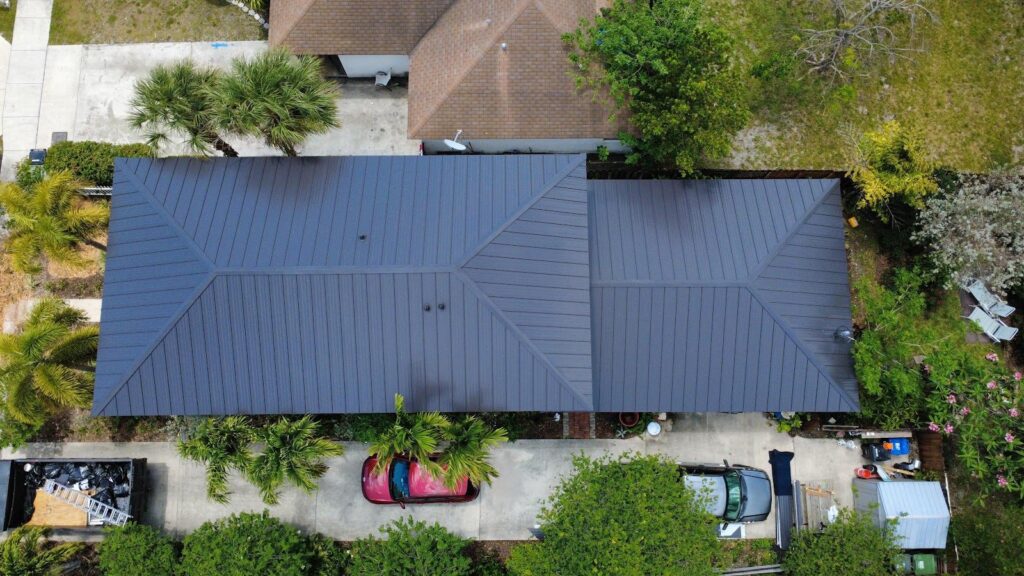
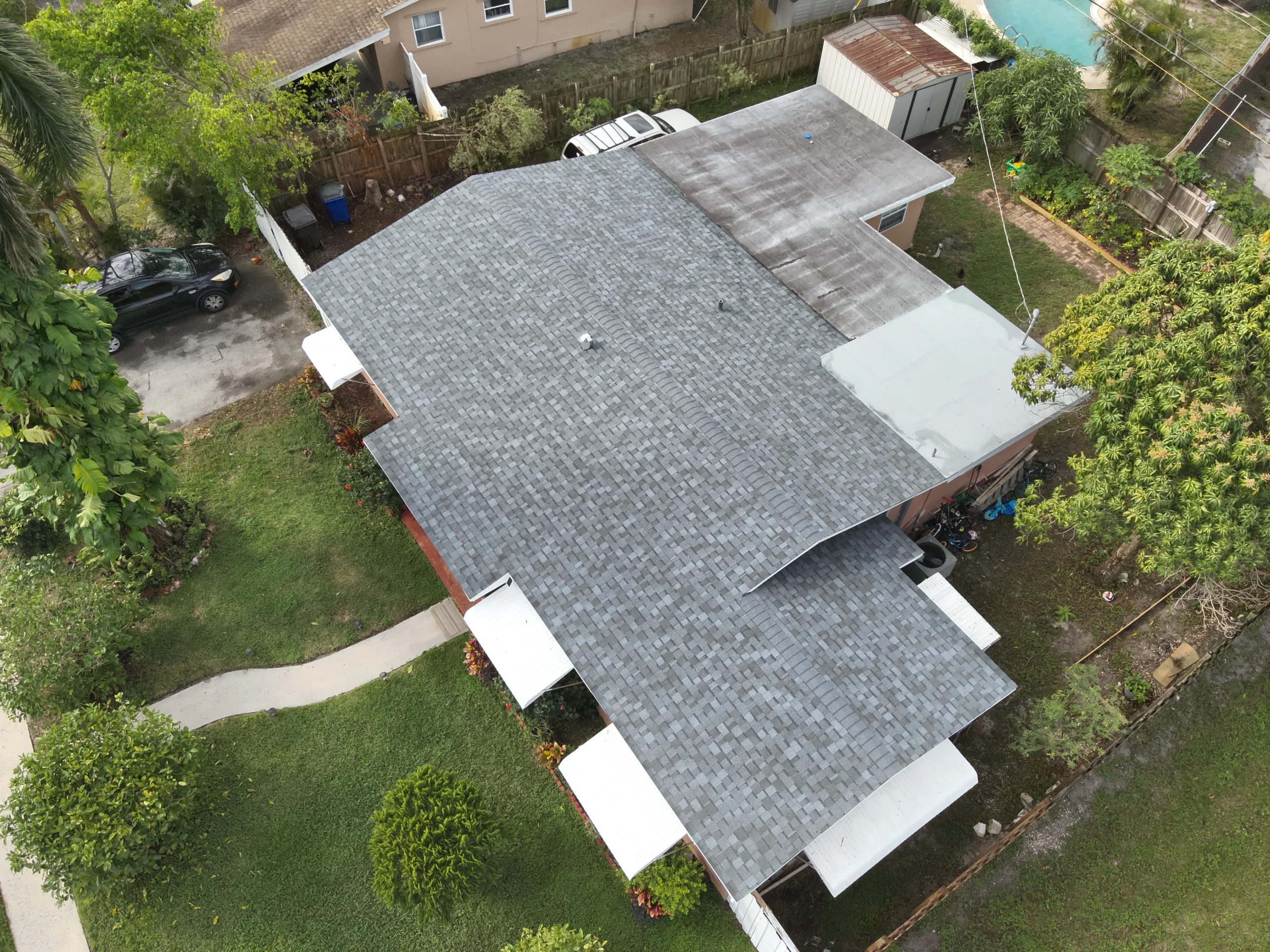
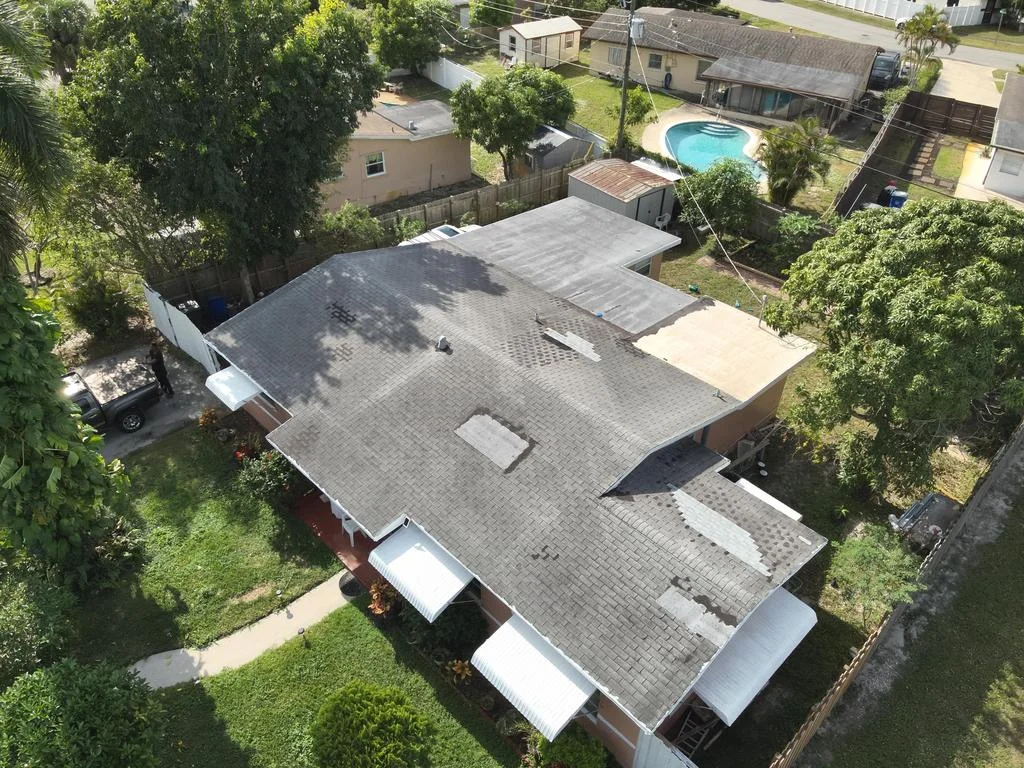
For example, Maze Roofing’s recent Fort Lauderdale standing seam metal roof replacement used corrosion-resistant Kynar 500-coated trim and flashing components and stainless steel fasteners, along with a self-adhering underlayment, as part of a system built for Broward County’s coastal wind and rain. Every project’s specifications should be matched to the property and the code that applies. Maze Roofing’s metal roofing systems page describes how it approaches metal roof selection and installation.
Non-metal coverings such as asphalt shingles and tile do not corrode, but they still rely on metal flashing, fasteners, and accessories, so coastal corrosion remains part of the conversation for every roofing type.
Salt, Wind, and Moisture Work Together
Coastal roofs face more than salt. Strong winds stress fasteners and edge details, and heavy rain tests flashing and sealants. A corroded fastener is a weaker fastener in a high-wind event. The National Hurricane Center’s hurricane preparedness resources remind us of the storm exposure these properties face. For Florida properties, roofing products used in many applications need approval documentation, and requirements differ between statewide rules and the stricter High-Velocity Hurricane Zone in Miami-Dade and Broward. Consider corrosion-resistant materials and wind-rated details together, and confirm the product approvals and code requirements that apply to your address.
Maintenance and Inspection on Coastal Roofs
Preventive attention does more than any single material choice. Practical steps include:
- Scheduling professional inspections periodically and after storms, with attention to fasteners, flashing, sealants, penetrations, and edge details
- Repairing finish damage, failed sealant, and loose or backing-out fasteners promptly
- Keeping gutters, drains, and valleys clear so water does not stand
- Ask your roofer what cleaning or rinsing, if any, is appropriate for your roofing material, since cleaning methods vary and some can damage finishes
- Keep documentation of inspections and repairs for warranty and insurance purposesDo not climb on a roof to inspect it yourself. Binoculars and ground-level observation can show rust staining, loose flashing, or discolored fasteners, and a professional can check the rest safely.
Local Context: Florida’s Coastal Markets
South Florida’s Broward, Miami-Dade, and Palm Beach counties; Tampa Bay’s Pinellas coast; and Southwest Florida’s Lee and Collier counties all face coastal exposure, but the specifics differ. Barrier islands and beachfront areas generally experience more direct salt spray than neighborhoods further inland, while storms and onshore winds can carry salt farther. Local building departments set permit and inspection requirements, and the HVHZ rules that apply in Miami-Dade and Broward do not automatically apply elsewhere. Maze Roofing’s Fort Lauderdale office serves Broward, Miami-Dade, and Palm Beach.
Key Points
- Salt air speeds corrosion mainly on metal fasteners, flashing, penetrations, and exposed metal; it does not affect every roof the same way.
- Corrosion of connectors and fasteners can weaken a roof’s wind resistance, so it is more than cosmetic.
- Distance from the ocean, exposure, material, coating, maintenance, and wind patterns all affect risk.
- Fasteners, flashing, and accessories matter as much as the roof covering itself.
- Regular professional inspection and prompt repair of finish or sealant damage limit corrosion.
- Confirm product approval and code requirements for your specific address.
Frequently Asked Questions
How does salt air damage a roof?
Salt-containing particles carried by wind settle on the roof and, with moisture, promote corrosion of metal components such as fasteners, flashing, vents, and exposed metal. Over time, corrosion can cause leaks and weaken connections.
Do metal roofs rust near the ocean?
A metal roof with an intact protective finish is designed to resist corrosion, but damaged finishes, cut edges, scratches, and fasteners can be starting points. The metal type, the finish, and compatible fasteners all matter, so ask your installer how these are specified.
Are shingle or tile roofs affected by salt air?
The shingles or tile themselves do not corrode, but the metal flashing, fasteners, and accessories that go with them can. Coastal exposure still matters for those components.
How close to the coast does salt air become a concern?
There is no single distance. Exposure generally decreases inland but depends on wind patterns, local geography, and storms. Beachfront and barrier island properties typically face more direct exposure than inland neighborhoods.
How often should a coastal roof be inspected?
There is no universal interval. Coastal roofs generally benefit from periodic professional inspection and inspection after severe weather, focused on fasteners, flashing, sealants, and penetrations. Follow any schedule specified in your warranty.
Protect Your Coastal Roof Before Corrosion Spreads
If your roof is near the water, a professional inspection can catch corrosion around fasteners, flashing, vents, and other roof penetrations before it becomes an active leak. Maze Roofing’s Fort Lauderdale and Tampa Bay teams can evaluate your roof, explain material and finish options for coastal conditions, and provide a clear written assessment.Schedule a free roof inspection today to review your coastal roofing options with a local Maze Roofing expert.