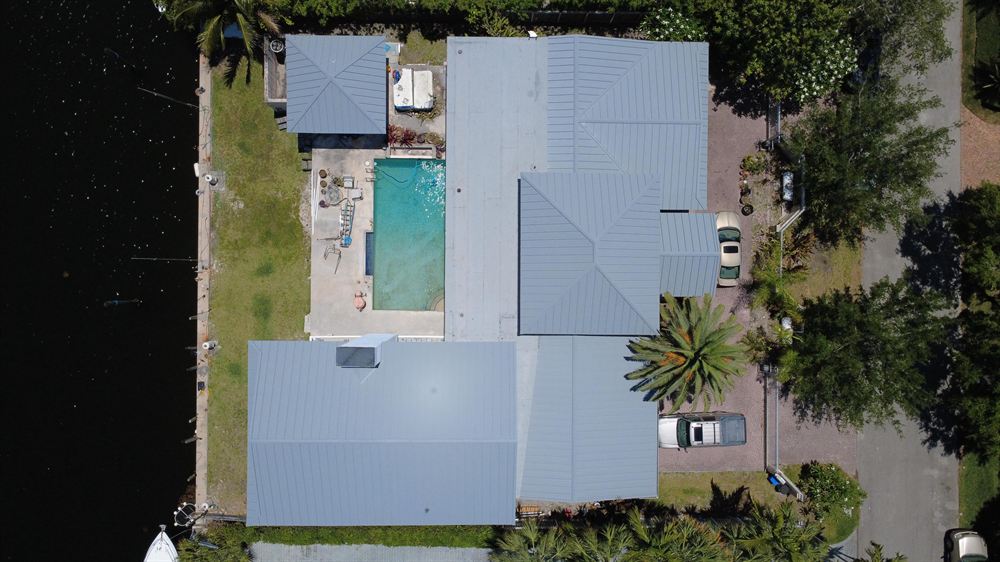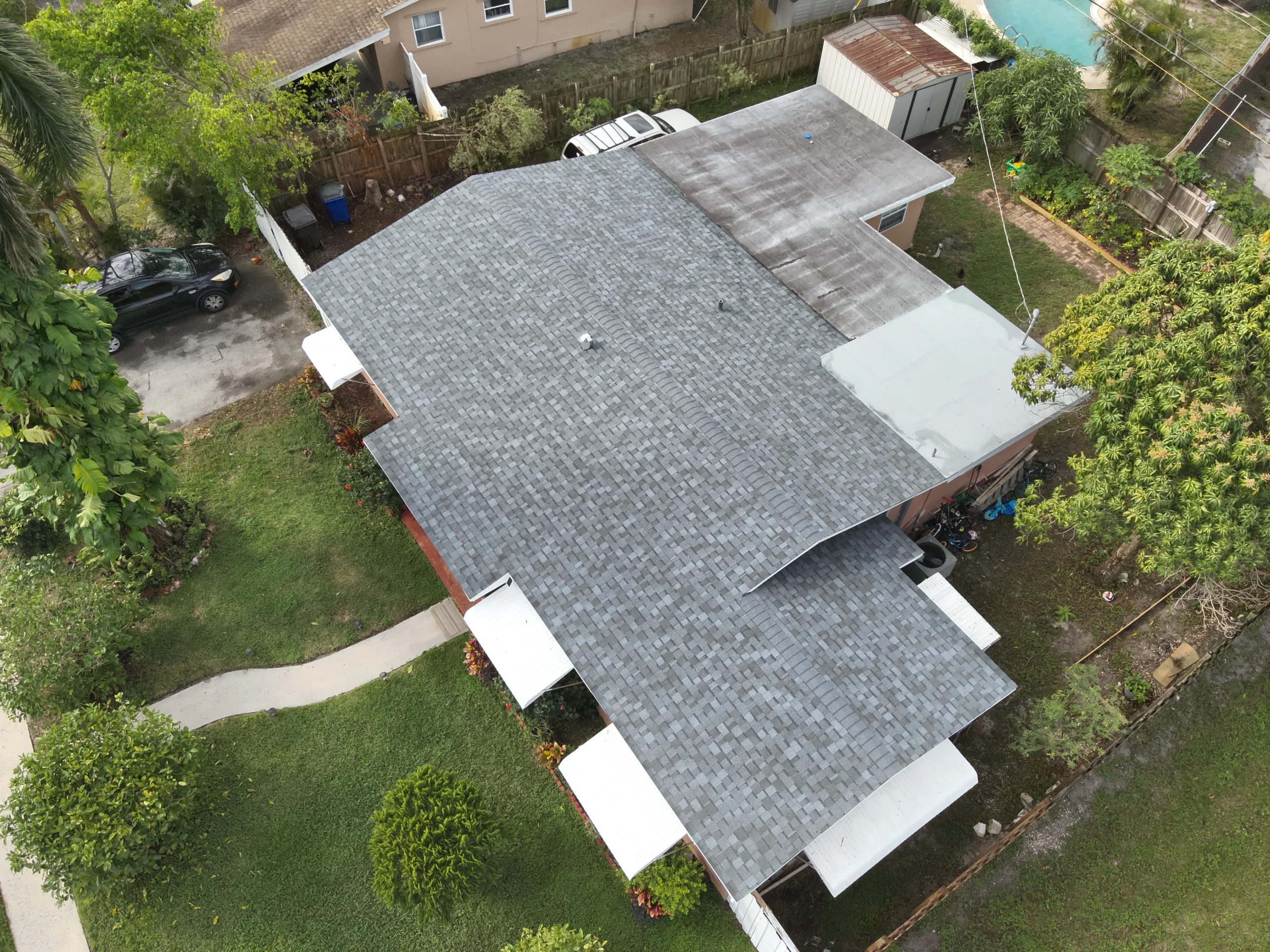

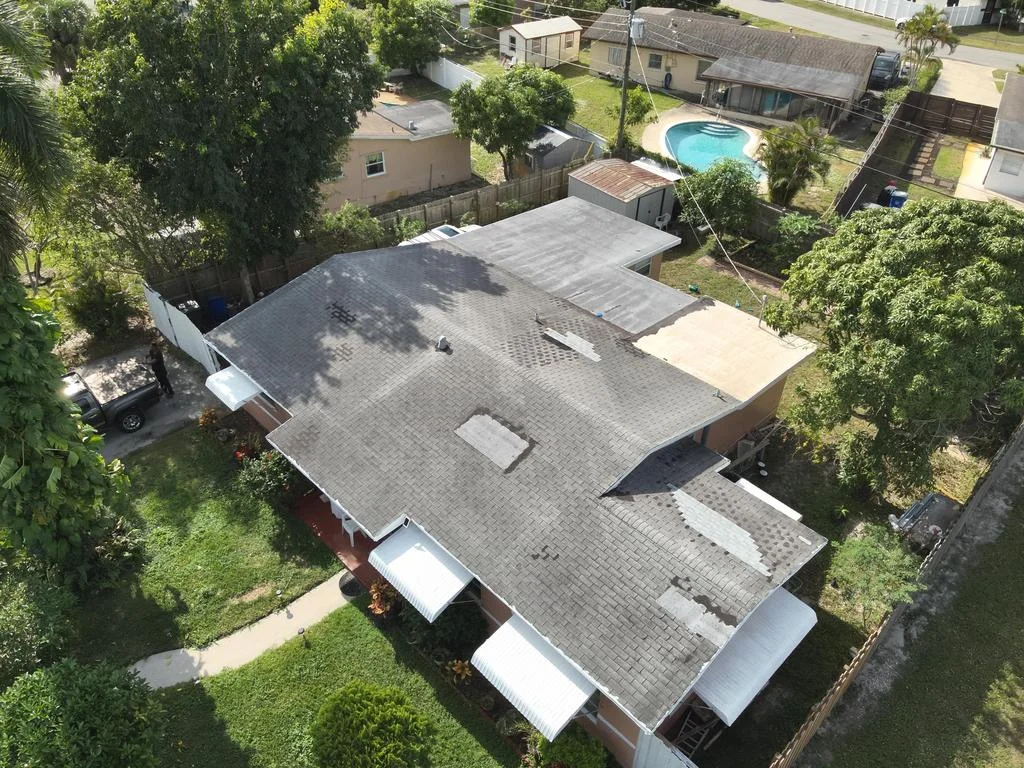
A small roof leak is rarely just a small problem. The drip you see on the ceiling is often the visible end of water that has already moved through the roof, soaked insulation, and traveled along the framing. Not every minor leak leads to major damage, and fear is not a good reason to panic. But leaks left alone give moisture time to do quiet damage, and that damage usually costs more to fix than the leak itself. Here is what can happen, why the source is rarely where the stain appears, and why an early inspection generally gives you more options.
Overview
This article is for homeowners and small-property owners who have noticed a stain, a damp spot, or a drip and are deciding whether it can wait. It explains how water travels from a roof to your ceiling, what materials it can damage, which health and safety concerns are real, and why prompt inspection matters. It does not suggest that every small leak will cause structural collapse. Many leaks are repairable at modest cost when caught early, and the right response depends on what an inspection finds.
How a Small Leak Gets Into the House
Water has to get through several layers to reach your ceiling. A typical steep-slope roof has roofing material on top, underlayment beneath it, a wood deck below that, and then attic framing and insulation. Water usually enters at a vulnerable point: a cracked or corroded flashing, a damaged vent boot, a missing or lifted shingle, a worn sealant around a penetration, or a clogged valley that sends water where it should not go.
Once it passes the surface layer, water follows gravity and surface tension. It can run down the underside of the deck, along a rafter, across the top of a ceiling joist, and then drip into the room at a spot several feet from where it entered. That is why the stain on your ceiling is not a reliable map to the leak. It is only where the water finally had somewhere to go.
The Damage That Can Build Up Quietly
Wet Insulation
Insulation absorbs and holds water. Wet insulation loses much of its ability to slow heat transfer, and it can stay damp for a long time because the attic is poorly ventilated. Wet insulation also acts like a sponge, continuously feeding moisture to the surrounding framing and drywall.
Ceiling and Drywall Damage
Drywall absorbs moisture and weakens. You may see yellow or brown rings, bubbling or peeling paint, sagging, or soft spots. Wet drywall can also stain even after the leak stops, and water can eventually cause the ceiling to fail if it accumulates above it.
Wood Deterioration and Decking Damage
Roof decking and framing are generally wood. Repeated wetting can lead to staining, softening, and eventual decay, especially if the wood stays damp. Decking that has lost strength can affect the whole roof because shingles, tile, or metal rely on a solid deck for fasteners.
Mold or Microbial Growth
Moisture is what allows mold to grow indoors. The U.S. Environmental Protection Agency’s guidance states that if you dry wet or damp materials within 24 to 48 hours after a leak, mold will not grow in most cases, and that the key to mold control is moisture control. The EPA also advises removing and replacing porous materials that have been wet for more than 48 hours. Its brief guide to mold, moisture, and your home explains these basics. An unnoticed leak in an attic or wall cavity can easily go unnoticed for years.
Electrical Risks
Water and electricity don’t mix. If water has reached a light fixture, ceiling fan, junction box, or outlet, do not touch it. If it is safe to reach your breaker panel, turn off power to the affected area and have a licensed electrician evaluate it before you use it again. This is a safety issue separate from the roof repair.
Interior Finishes and Belongings
Water damage reaches paint, flooring, cabinets, and furnishings. These losses often turn a modest roof repair into a larger project and a bigger insurance question.
Structural Deterioration
Over time, repeated wetting can weaken framing and connections. This is the least common outcome and usually requires sustained moisture, but it’s why you should never treat a persistent leak as purely cosmetic.
Why Minor Does Not Always Mean Harmless
A leak is not minor if the water is going somewhere you cannot see. A few indicators that a leak deserves prompt attention:
- Stains that grow or reappear after painting
- A musty smell in a room, closet, or attic
- Damp insulation or dark staining on attic wood
- Staining that appears only after wind-driven rain
- Peeling paint, bubbling, or a soft ceiling
- A leak near light fixtures or electrical components
Intermittent leaks are particularly easy to dismiss because they stop when the rain stops. Water may still be trapped in insulation and decking long after the sky clears.
What to Do When You Notice a Leak
First, protect people and property. Move furniture and valuables away from the area, place a container under any active drip, and protect floors. If a ceiling is bulging or sagging with water, stay out from under it and call a professional rather than trying to relieve it yourself. Photograph the damage for your records, and note when and in what weather it appeared.
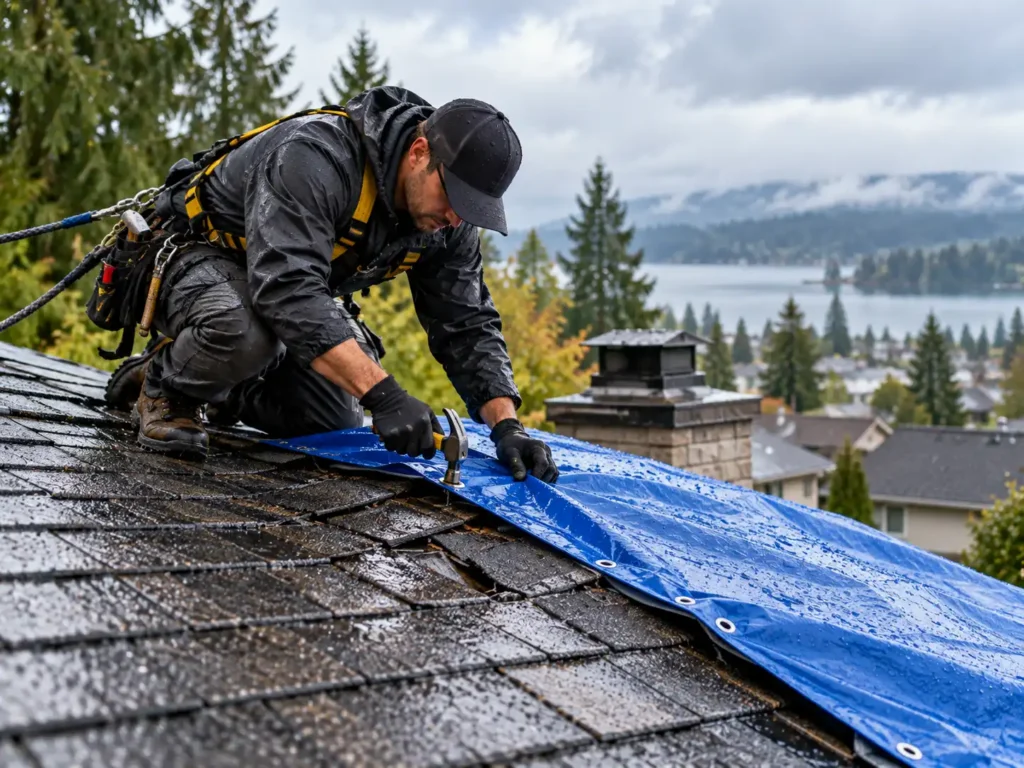
Second, do not climb onto the roof. The National Roofing Contractors Association (NRCA) advises that homeowners should only inspect roofs from ground level because the risk of falling is too great without the proper safety systems. The Occupational Safety and Health Administration (OSHA) reports that falls are a leading cause of death among residential construction workers and roofers, and its residential fall protection guidance exists because even experienced roofers face hazards like uneven decking, wind gusts, and slick surfaces. Roof leak repair is not a DIY job.
Third, arrange an inspection. For sudden or heavy leaks, our guide on how to deal with sudden roof leaks outlines safe first steps.
Why Early Inspection Generally Gives You More Options
When you find a leak early, the cause is often a single failed component: a flashing, a vent boot, a handful of shingles, or a sealant. Fixing it can be a modest repair. When a leak runs for a long time, the repair may also need to include wet insulation, drywall, damaged decking, and possibly mold remediation, and the roof itself may be in worse condition. Early action doesn’t guarantee a small repair, but it generally keeps your options wider.
A professional inspection looks at more than the stain. A good inspector will check the flashing, penetrations, valleys, underlayment (where visible), attic conditions, and the staining pattern to trace the water’s path. Maze Roofing’s residential roofing services include repairs and documented inspections, and crews respond 24/7 for emergency leaks.
Key Points
- A ceiling stain shows where water landed, not necessarily where it entered the roof.
- Wet insulation, drywall, and decking can hold moisture long after the rain stops.
- EPA guidance: drying water-damaged areas within 24 to 48 hours generally prevents mold in most cases.
- Water near light fixtures or outlets is an electrical hazard. Don’t touch them; call an electrician.
- Never climb a roof to find or fix a leak. Inspect from the ground only.
- Not every small leak causes major damage, but ignoring it removes your chance to fix it cheaply.
Frequently Asked Questions
Can a small roof leak cause big damage?
It can, if it continues for a long time. Water can soak insulation, stain and weaken drywall, damage wood decking, and encourage mold. Not every small leak escalates, but unaddressed moisture generally makes repairs larger and more expensive.
Why is the leak not where the stain is?
Water moves along the underside of roof decking, down rafters, and across ceiling joists before it drips. The stain shows where it finally exited, which may be several feet from the entry point.
How quickly do I need to fix a roof leak?
As soon as reasonably possible. The EPA notes that drying wet materials within 24 to 48 hours in most cases prevents mold growth, and long-term wetting can damage insulation, decking, and framing. For an active leak, temporary protection such as a tarp may be appropriate while a repair is arranged.
Can a roof leak cause mold?
Yes, if materials stay wet. Mold needs moisture, and leaks in attics or wall cavities can remain damp for long periods. Controlling moisture is the key to preventing mold, and large areas of growth should be evaluated by qualified professionals.
Should I fix a roof leak myself?
No. Working on a roof involves fall hazards and risk of making damage worse. Inspect from the ground, protect your belongings, and have a qualified roofer find and fix the source.
Get Ahead of Roof Leaks Before They Spread
If you notice a ceiling stain, a drip, or damp insulation, don’t wait for the next storm to reveal how serious the leak is. Maze Roofing can inspect your roof, trace the leak’s source, document the issue with photos, and provide an honest repair recommendation. Call your local Maze Roofing office or schedule a free roof inspection today. For active leaks, we offer emergency tarp service and leak response 24/7.