
The Hidden Mechanics of Roof Drainage
When I show up for a residential roof inspection across our Florida or Pennsylvania service areas, the first thing homeowners usually point out is a missing shingle or a visible ceiling stain. But as a roofing technician, the very first thing I look at before I even set up my ladder is the roof pitch. The angle of your roof isn’t just about architectural style or curb appeal; it is the primary engine driving your entire drainage system. Every drop of rain that hits your property has to be safely channeled away from your foundation. If your roof’s slope is miscalculated during a Roof Replacement & Installation, or if the edge drainage components are poorly designed, you are essentially putting a ticking time bomb over your living room. Let’s break down exactly how roof pitch works and why it dictates everything from the materials we use to the lifespan of your home.
Decoding Roof Pitch: What the Numbers Mean
In the roofing industry, we don’t usually talk about slope in terms of degrees. Instead, we use a ratio of “rise over run.” Specifically, we measure how many inches the roof rises vertically for every 12 inches it runs horizontally. So, a “6/12 pitch” means the roof goes up 6 inches for every foot it extends inward toward the peak.
Understanding this number is critical. A standard residential roof usually falls between a 4/12 and 9/12 pitch, allowing water to cascade off quickly into the gutters. Anything below a 3/12 is considered a low-slope roof, and commercial flat roofs typically have a 1/4-inch to 1/2-inch slope per foot just to prevent water from sitting still. When we measure your pitch during an estimate, we are calculating exactly how fast gravity is going to pull water off the deck during an intense summer downpour.
How Slope Dictates Your Roofing Materials
Here is a hard truth that a lot of budget contractors ignore: you cannot put just any roofing material on any roof pitch. The steepness of your roof absolutely dictates what we can install to keep your home watertight.
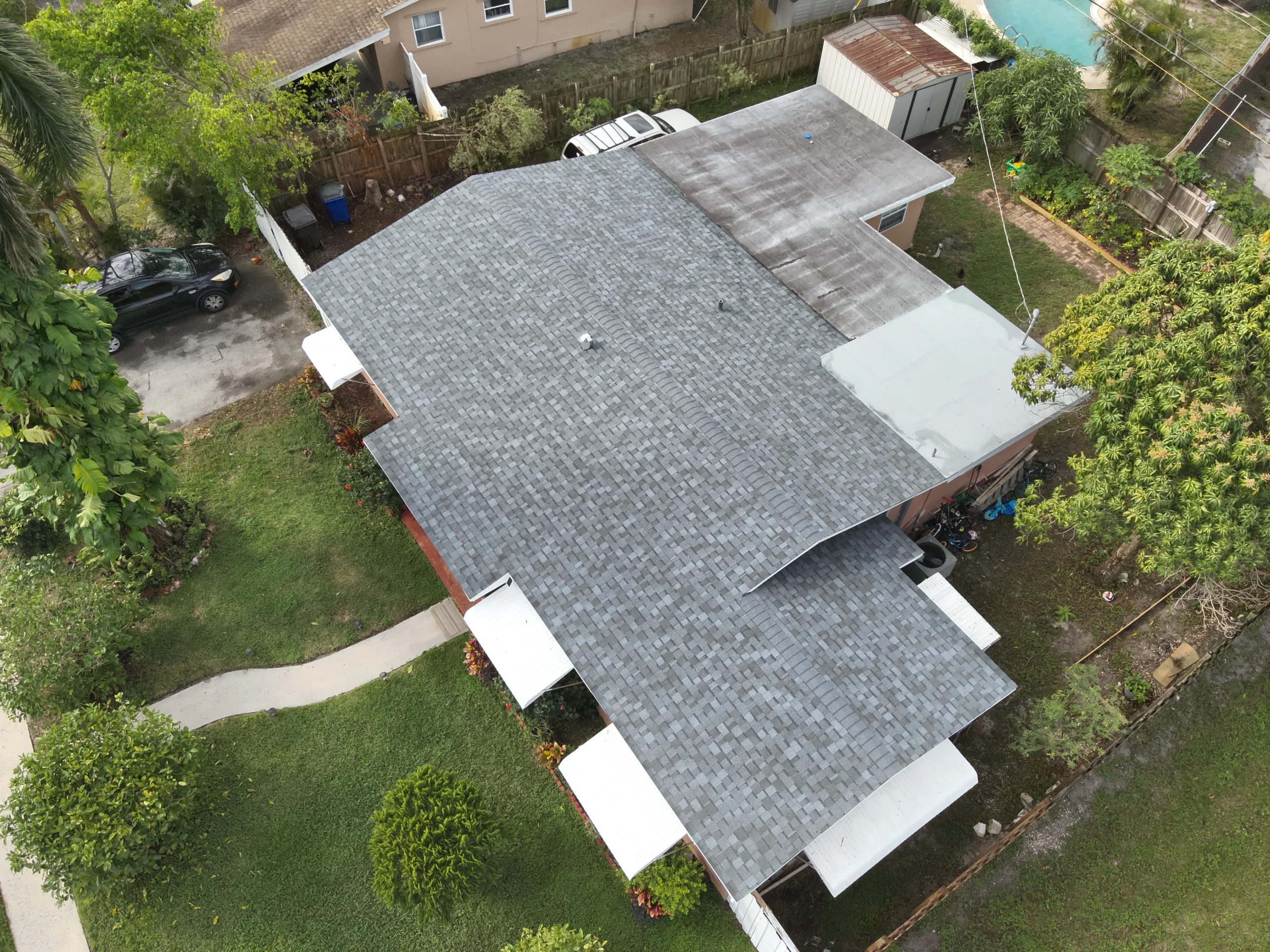
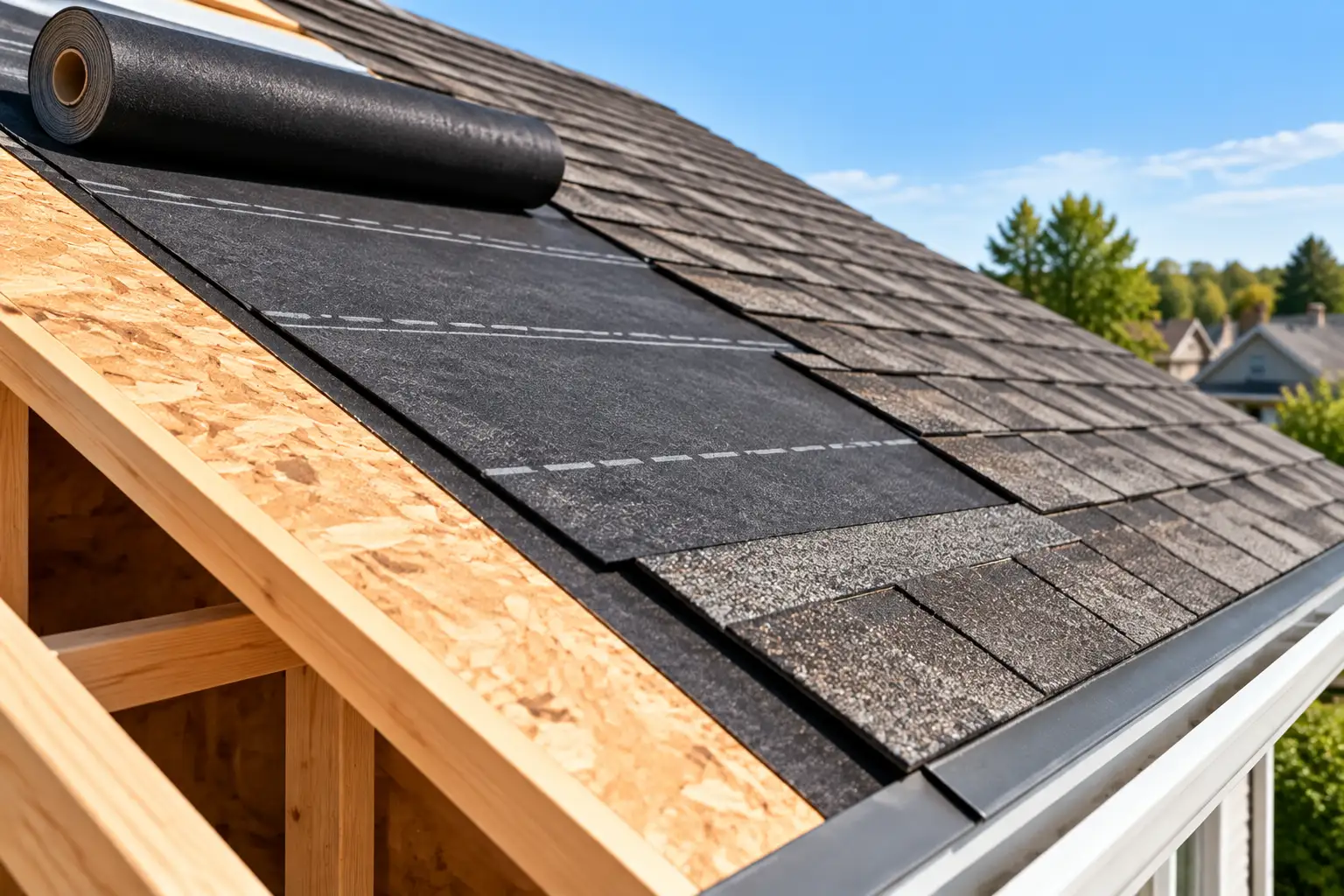
For a steep-slope roof (anything 4/12 or higher), gravity works in our favor. We can confidently install architectural Shingle Roofing, clay tiles, or standing seam metal. Because the water sheds so rapidly, there is very little risk of it blowing backward up under the overlapping layers of material.
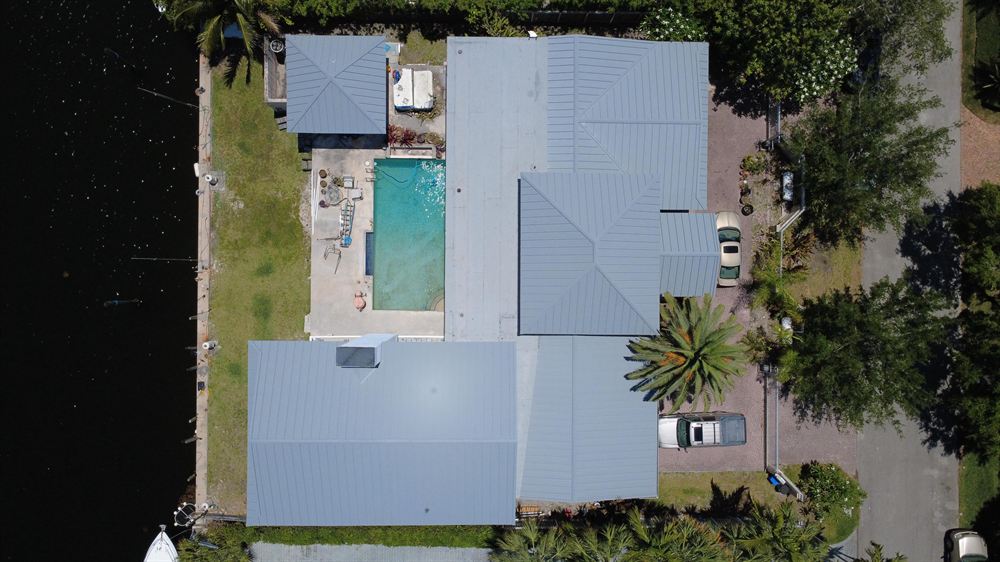
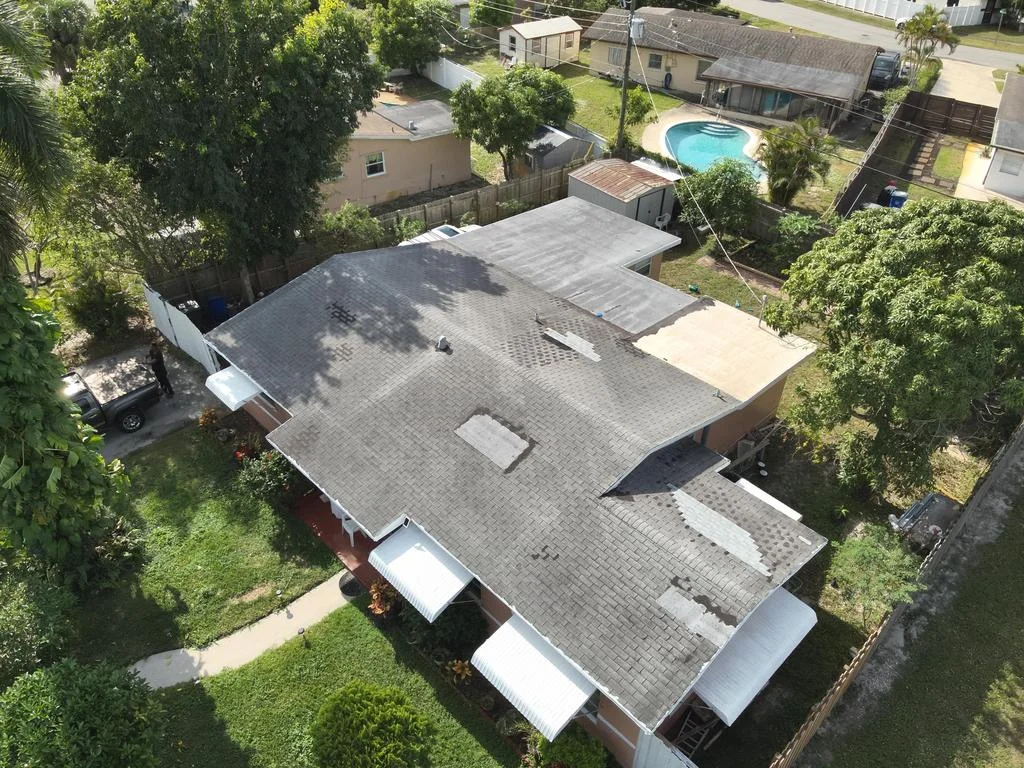
However, if you have a low-slope section—like a back patio addition or a mid-century modern home with a 2/12 pitch—installing standard overlapping shingles is a massive mistake. Water moves slower on low slopes, and high winds can easily drive rain backward beneath the shingle tabs, rotting the wood decking underneath. For low-slope areas, we have to transition to specialized modified bitumen roll roofing, or even a Commercial Roofing material like a TPO or EPDM membrane to create a truly waterproof, impenetrable barrier.
The Dangers of Poor Drainage: Ponding and Rot
When roof pitch and drainage systems fail to work together, the structural damage happens incredibly fast. On low-slope roofs, the biggest enemy is “ponding water.” This is exactly what it sounds like: water that sits on the roof surface for more than 48 hours after a storm. Ponding acts like a magnifying glass for UV rays, rapidly breaking down the roofing material. Even worse, the sheer weight of standing water can physically bow the wooden roof trusses underneath, creating a deeper depression that catches even more water the next time it rains.
On steep-slope roofs, poor drainage usually manifests at the roof valleys—the interior angles where two roof planes intersect. These valleys act like rushing rivers during a heavy storm. If the flashing in the valley isn’t installed perfectly, or if the lower gutters can’t handle the sheer volume of water rushing down, that water will back up under the shingles, leading to severe rot along your roof decking and exterior walls.
Evaluating Gutters, Scuppers, and Downspouts
Your roof’s pitch only does half the job; it simply gets the water to the edge. The rest relies entirely on your edge drainage system. For standard residential roofs, a seamless gutter system must be precisely angled toward the downspouts. If the gutter is perfectly level, the water just sits there, eventually rusting the metal and rotting out your wooden fascia boards.
For flat roofs or homes with parapet walls, we rely on scuppers (openings cut into the wall edges) or internal roof drains. A critical part of any flat roof installation is ensuring that the rigid insulation board underneath the membrane is tapered correctly to gently guide water directly into these scupper boxes.
Protect Your Investment with a Professional Installation
A new roof is a massive investment, and it is only as strong as its ability to shed water. You shouldn’t have to worry about unseen wood rot or ponding water every time a heavy storm rolls through. Whether you are dealing with a complex multi-pitch architectural design or need to replace a failing low-slope patio roof, the teams at Maze Roofing know exactly how to engineer a watertight system. We bring years of hands-on experience, precise pitch calculations, and premium materials to every job across Florida, Pennsylvania, and New Jersey. Don’t let poor drainage compromise your property’s foundation. Reach out to us today to schedule a free, comprehensive roof inspection, and let’s make sure your home is fully protected.