The Commercial Flat Roof Dilemma
Every week, I walk commercial flat roofs across our service areas, from sprawling industrial warehouses to local retail centers. When a building owner realizes it is time for a full roof replacement, the conversation almost always comes down to two heavy hitters: TPO and EPDM. Both are single-ply membranes, and both are designed to keep heavy rain and harsh weather out of your property. But as a roof technician, I can tell you that they behave very differently once they are actually rolled out onto your decking. Making the wrong choice can mean higher energy bills, premature seam failures, or unnecessary maintenance headaches down the road. Let’s look at the real-world performance of both systems so you know exactly what you are investing in.
EPDM: The Proven Rubber Workhorse
If you have ever been on a commercial flat roof, you have probably walked on EPDM. It is a synthetic rubber membrane that has been the industry standard for decades. What I appreciate about EPDM is its sheer durability and physical flexibility. Because it is essentially a heavy-duty rubber sheet, it handles extreme temperature swings beautifully without cracking or becoming brittle. It expands in the summer heat and contracts during the freezing winters we see in our Greater Philadelphia and South Jersey service areas.
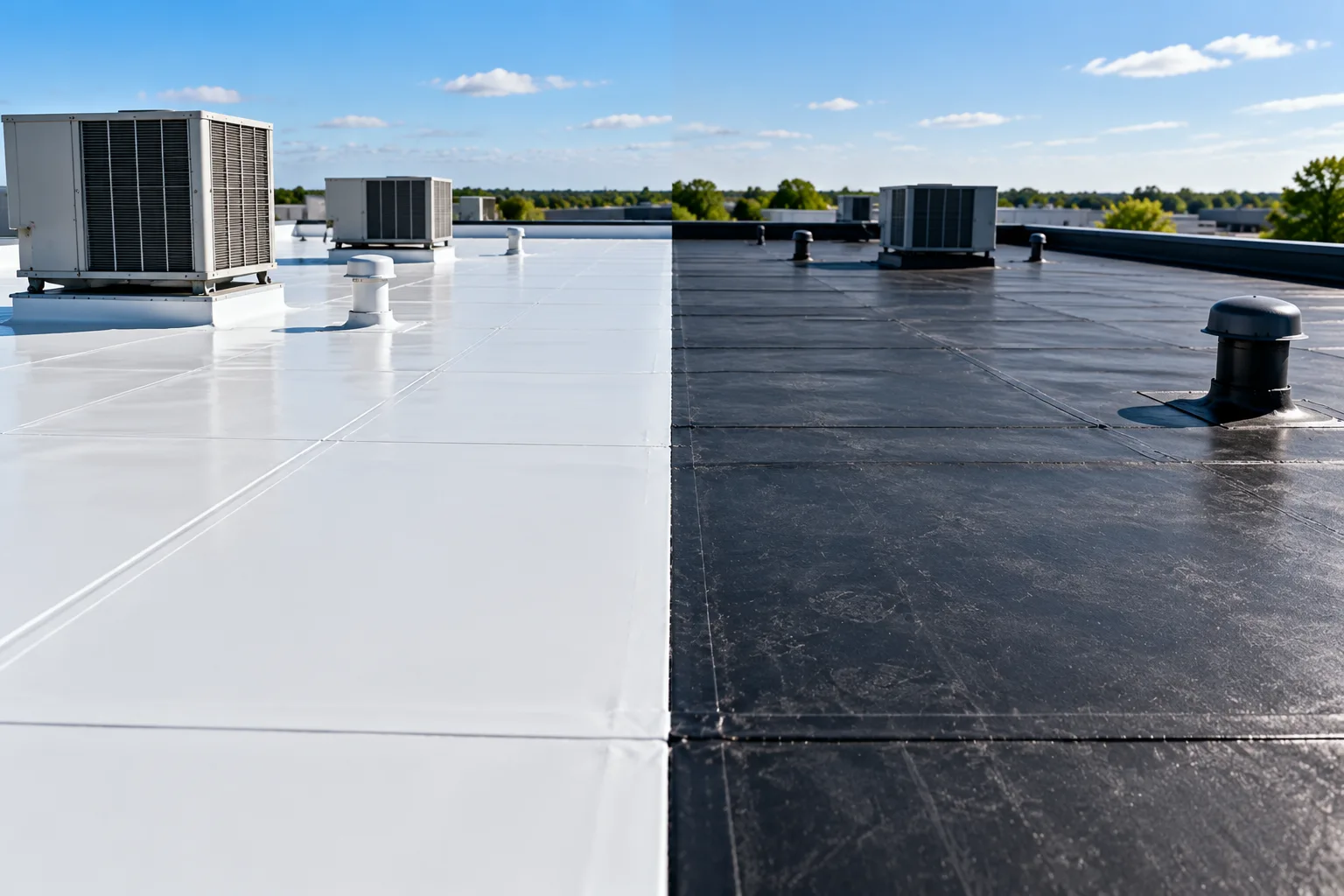
However, EPDM is naturally dark gray or black. While that dark color is great for absorbing heat and melting snow in northern climates, it absorbs a massive amount of solar radiation. If your building is down in our Tampa Bay or South Florida markets, a black roof forces your HVAC system to work overtime to keep the interior cool. EPDM seams are also secured using specialized liquid adhesives or double-sided roofing tape. While these chemical adhesives are incredibly strong, they are still a glued bond, which means they are usually the first point of failure as the roof ages and the adhesive eventually degrades.
TPO: The Energy-Efficient Upgrade
Thermoplastic Polyolefin, or TPO, is the newer kid on the block, but it has completely taken over the commercial roofing industry. Unlike rubber, TPO is a flexible plastic membrane that is manufactured in a bright white finish. That white surface is highly reflective, meaning it bounces the sun’s harsh UV rays away from your building rather than absorbing them. For our commercial clients in Florida, installing a modern TPO Roofing system leads to a noticeable, immediate drop in cooling costs.
The biggest structural advantage of TPO lies in how we put it together. Instead of gluing or taping the overlapping sheets, we use a specialized robotic hot-air welder to literally melt the edges together. Once those seams cool, they become a single, continuous sheet of waterproof plastic. A heat-welded seam is actually stronger than the membrane itself, making it incredibly resistant to standing water and high wind uplift. The trade-off is that TPO is slightly stiffer than rubber, so it requires a highly skilled crew to properly detail custom flashing around your AC units, pipes, and drains.
Installation Realities and Long-Term Care
Whether you choose rubber or plastic, a single-ply roof is only as good as the hands installing it. A lot of premature commercial roof failures happen simply because a contractor tried to rush the installation. With EPDM, the heavy membrane has to be completely relaxed before we can adhere it to the insulation board; otherwise, it shrinks over time and pulls away from the parapet walls. With TPO, the welding temperatures have to be dialed in perfectly—if the welder is too cold, the seam will pop open, and if it is too hot, it burns right through the plastic core.
Maintenance also looks a bit different for both systems. If an EPDM roof gets punctured by a dropped tool or a flying branch, it is incredibly easy to patch with a fresh piece of rubber and some primer. TPO can also be patched, but repairing an older TPO roof requires scrubbing the weathered membrane perfectly clean so the new plastic can properly weld to the aged material. That is why we highly recommend getting your building on a routine Commercial Roofing maintenance program. Routine checkups allow us to catch tiny punctures, clear out clogged drains, and secure failing sealants before they turn into active leaks inside your facility.
Making the Right Call for Your Property
Choosing between TPO and EPDM ultimately comes down to your building’s location, the local climate, and what sits on top of your roof. If you own a property in a colder climate with a lot of heavy rooftop foot traffic from HVAC mechanics, the rugged, scuff-resistant flexibility of EPDM is very hard to beat. However, if your building is exposed to relentless southern sun and you want to slash your air conditioning expenses, a reflective white TPO membrane is almost always the smartest long-term investment you can make.
Secure Your Building with Maze Roofing
You should never have to guess if your commercial roof is going to hold up during the next major storm. A failing flat roof doesn’t just cause severe water damage; it halts your entire business operation and puts your inventory at risk. Whether you need a full roof replacement and installation or a targeted repair to extend the life of your current membrane, the local teams at Maze Roofing are ready to step in. We bring years of hands-on expertise to every job, delivering honest inspections, clear photographic reports, and flawless installations across Florida, Pennsylvania, and New Jersey. Don’t wait for a ceiling leak to force your hand. Contact us today to schedule a comprehensive commercial roof inspection, and let’s build a roofing system that protects your business for decades to come.