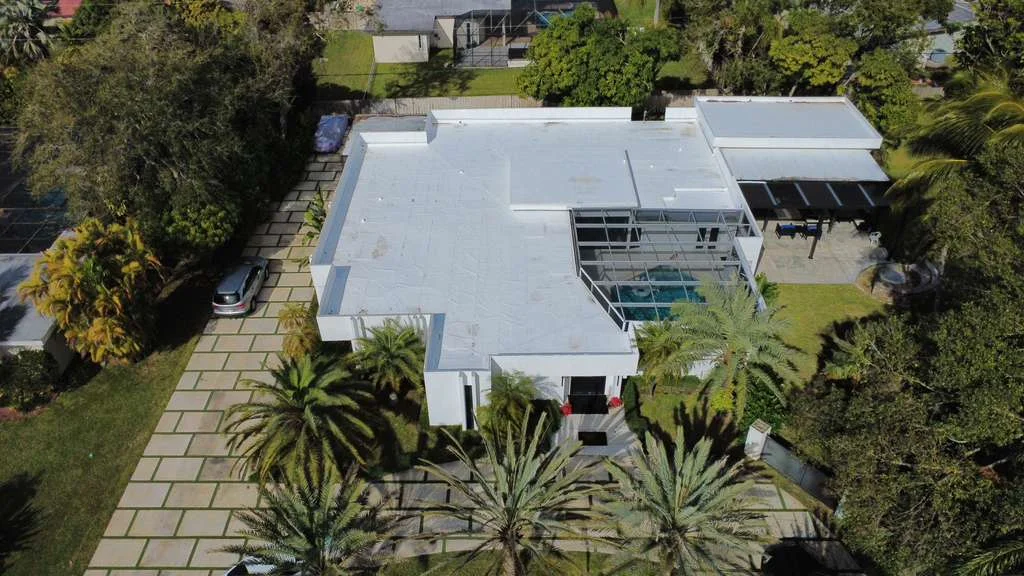
A flat roof coating is a liquid-applied layer, usually reflective, installed over an existing roof surface to protect it, seal minor defects, and, in some cases, lower roof surface temperatures. Coatings can extend the useful life of a roof that is still fundamentally sound, making them a form of restoration rather than replacement. They are not a cure-all. A coating cannot fix saturated insulation, structural damage, or a roof that has failed throughout, and applying one over the wrong roof can waste money. This guide explains how coatings work, the main types, and how to decide whether one fits your building.
Overview
This article is for commercial property owners, facility managers, and owners of low-slope residential roofs who are weighing coating against repair or replacement. It covers what coatings are, the common types, how they relate to reflectivity and UV exposure, what must be true for a coating to work, and when it is not appropriate. It is educational and does not recommend a specific coating brand or system, since the right product depends on your roof.
What Is a Flat Roof Coating?
A roof coating is a fluid-applied membrane that cures into a continuous protective layer over a roof surface. On flat and low-slope roofs, coatings are commonly applied over existing single-ply membranes, built-up or modified bitumen roofs, and metal roofs to restore a weathered surface, seal minor flaws, and add reflectivity. The U.S. Environmental Protection Agency lists liquid coatings and reflective membranes among the cool roof options for low-slope roofs, and notes that low-slope roofs need periodic cleaning to maintain reflectance.
Restoration vs. Replacement
Coating is a restoration approach. It makes sense when the existing roof system is still structurally sound and watertight enough to be a good substrate, and when the main issues are surface weathering, minor seam or flashing problems, or heat. Replacement makes sense when the roof has widespread failure, wet insulation, or damaged decking.
Maze Roofing’s commercial maintenance guidance frames the decision similarly: maintenance and restoration are appropriate when a roof is sound but aging, while replacement may be needed when the roof is past its service life, insulation is wet, leaks are widespread, or repairs no longer hold. An inspection is what separates the two.
Common Types of Roof Coatings
Coatings are generally grouped by their base chemistry. Each has strengths and limits, and the final choice depends on manufacturer specifications and compatibility with the existing roof.
| Coating type | General characteristics | Common cautions |
|---|---|---|
| Acrylic | Water-based, reflective, widely used on many substrates | Generally not favored where water stands for long periods |
| Silicone | Often chosen where ponding water is a concern; reflective | Compatibility and surface cleanliness are critical; some surfaces are difficult to recoat |
| Urethane | Tough, often used where abrasion or foot traffic is a concern | Often applied as part of a multi-coat system; may need a reflective topcoat |
These are general tendencies, not product claims. The right product depends on the substrate, climate, drainage conditions, and manufacturer requirements, and many systems combine a base coat, seam reinforcement, and a topcoat.
Reflectivity, UV Exposure, and Heat
Reflective coatings often bounce sunlight away from the roof. Two properties matter: solar reflectance (how much sunlight is reflected) and thermal emittance (how effectively the surface releases absorbed heat). The Cool Roof Rating Council (CRRC) is a nonprofit that develops methods to evaluate and label the radiative properties of roofing products, and its rating program is a common place to check a product’s reflectance and emittance values.
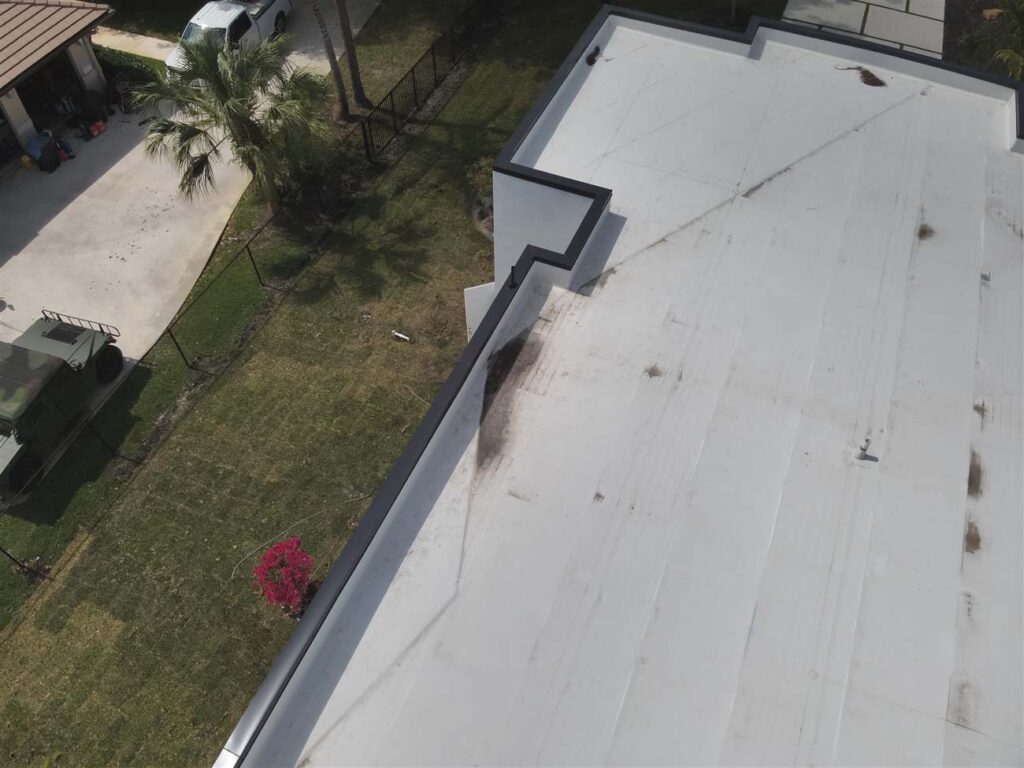
Reflectivity can lower roof surface temperatures, and in sunny climates like Florida, it is a major reason owners consider coatings. The U.S. Department of Energy describes cool roofs as designed to keep roof temperatures lower while the sun shines by reflecting sunlight and emitting heat, and its consumer guide to cool roofs notes that savings depend on factors like climate. How much a coating reduces cooling costs for a particular building depends on insulation, HVAC, roof area, use, and energy prices, so avoid any promise of a specific percentage. UV exposure also degrades roofing surfaces, and a coating can add a protective layer, but a coating itself weathers and may need maintenance or recoating over time.
What Has to Be True for a Coating to Work
A coating is only as good as the roof beneath it and the preparation.
Existing Membrane Condition
The existing roof must be sound. Large blisters, widespread splits, deteriorated membrane, or failing fasteners mean the substrate cannot support a coating.
Moisture Below the Roof
Wet insulation or trapped moisture under the roof membrane is a deal-breaker. Coating over a wet roof can trap moisture and hide a problem that keeps spreading. Moisture surveys and core samples, where appropriate, help determine what is under the surface.
Surface Preparation and Adhesion
Coatings must bond to a clean, dry, compatible surface. Remove dirt, chalking, oils, algae, and mildew, and prime some substrates. Poor preparation commonly causes adhesion failure.
Seam and Flashing Repair
Repair open seams, failing flashing, and damaged penetrations before coating. Coating is not a substitute for fixing these details.
Substrate Compatibility
A coating chemistry must be compatible with the existing roof material. Some combinations require special primers or are not recommended at all, so confirm compatibility with the manufacturer’s specifications.
Ponding Water Considerations
Standing water is hard on roofs and on some coatings. If a roof ponds, address the underlying drainage problem, such as inadequate slope, clogged drains, or deflected decking. Tapered insulation can sometimes be used to improve drainage, and in some cases a coating that tolerates water is appropriate, but a coating does not fix the underlying drainage problem.
When a Coating May Not Be Appropriate
Be cautious about coating when:
- Insulation under the membrane is wet or compromised
- The deck is damaged or structurally unsound
- The existing roof has widespread failure or repeated leaks
- Drainage problems remain unresolved
- The surface cannot be cleaned and prepared properly
- The roof is near the end of its service life and a coating would be a short-term patch
- The coating is not compatible with the existing materialA coating cannot fix saturated insulation, structural damage, major decking failure, or every leaking roof. An honest inspection should say so.
Coatings and Maintenance
Even a well-applied coating is part of a maintenance plan, not a replacement for one. Keep drains and scuppers clear, check seams and flashings, and inspect the coating’s condition periodically. Maze Roofing’s commercial flat roofing page covers TPO and EPDM systems, including reflective coatings to extend single-ply roofs.
For other flat and low-slope options, see the flat roofing systems page, which describes flat and low-slope options.
Key Points
- A roof coating is a liquid-applied layer that restores and protects an existing roof; it restores, it doesn’t replace.
- Acrylic, silicone, and urethane coatings differ; the right choice depends on the substrate, drainage, climate, and manufacturer specifications.
- Reflective coatings can lower roof surface temperatures, but energy savings vary and you shouldn’t promise a percentage.
- A coating works only over a sound, dry, clean, compatible roof with sealed seams and flashing.
- Coatings cannot fix saturated insulation, structural damage, major decking failure, or every leak.
- Inspect the roof before coating and plan for ongoing maintenance.
Frequently Asked Questions
What is a flat roof coating?
It is a liquid-applied protective layer that cures into a continuous membrane over an existing roof. It is commonly used to restore weathered surfaces, seal minor flaws, and add reflectivity on low-slope roofs.
Can a coating fix a leaking flat roof?
Sometimes, if the leak comes from minor surface flaws or seams that are repaired first. A coating cannot fix saturated insulation, structural damage, or widespread roof failure, so you must assess the roof before coating.
Is coating cheaper than replacing a flat roof?
Coating is often less costly than replacement when the existing roof is a suitable substrate, but costs depend on roof size, condition, preparation, and product. If the roof is failing broadly, a coating may only delay the need for replacement.
How do I choose between acrylic, silicone, and urethane coatings?
The choice depends on the existing roof material, drainage and ponding conditions, climate, traffic, and manufacturer compatibility requirements. A qualified contractor should explain why a specific product suits your roof.
Can you coat over wet insulation?
No. Wet insulation or trapped moisture under the membrane should be identified and addressed before coating. Coating over it can trap moisture and allow the damage to continue.
Find the Right Plan for Your Flat Roof
If you manage a flat roof and are unsure whether coating, repair, or replacement is the better option, start with a detailed inspection. Maze Roofing can assess the membrane, seams, flashing, drainage, and signs of trapped moisture to understand the roof’s true condition. Request a commercial roof assessment today to get a practical recommendation for your flat or low-slope roof.